IriusRisk Alternatives for Enterprise Threat Modeling
- /
- /
- /
- /
- /
- /
- /
- /
- /
- /
- /
- /
- /
- /
- /
- /
- /
- /
- /
- /
- /
- /
- /
- /
- /
- /
- /
- /
- /
- /
- /
- /
- /
- /
- /
- /
- /
- /
- /
- /
- /
- /
- /
- /
Organizations searching for an IriusRisk alternative are rarely looking for the same thing. Some want a different threat modeling methodology. Others need stronger business-risk analysis, broader infrastructure coverage, a lower-cost starting point, threat modeling as code, or direct access to expert practitioners.
IriusRisk is an established AI-assisted threat modeling and secure-design platform. Its current offering emphasizes architecture-led modeling, a draw.io-based interface, security and compliance libraries, automated threat and countermeasure generation, AI-assisted model creation, issue-tracker integrations, SaaS and on-premise enterprise options, and a free Community Edition with limited active models.
The right alternative therefore depends on what an organization wants to change. A useful evaluation should begin with methodology, scope, operating model, architecture workflow, automation, risk analysis, governance, integrations, deployment, and access to expert support.
- /
- /
- /
- /
- /
- /
- /
- /
- /
- /
- /
- /
- /
- /
- /
- /
- /
- /
- /
- /
- /
- /
Why Organizations Consider IriusRisk Alternatives
IriusRisk may be a strong fit for teams that prioritize secure design, visual architecture modeling, reusable content, AI assistance, compliance mapping, and enterprise workflows. An organization may still consider alternatives when its requirements differ from that operating model.
- A prescriptive PASTA-based methodology is required.
- Business impact and realistic attack viability need to drive prioritization.
- The organization wants a vendor independent of the combined IriusRisk and ThreatModeler organization.
- Threat modeling must cover cloud infrastructure, operational technology, devices, or enterprise architecture in a different way.
- Developers want models stored as code and reviewed through repositories and pipelines.
- A free or open-source tool is sufficient for the current scale.
- The organization wants direct practitioner support, facilitation, or adversarial validation.
- Data residency, deployment, portability, or licensing requirements differ from the available IriusRisk plans.
- The current process produces threat lists but not actionable business-risk decisions.
- /
- /
- /
- /
- /
- /
- /
- /
- /
- /
- /
- /
- /
- /
- /
- /
- /
- /
- /
- /
- /
- /
IriusRisk Alternatives at a Glance
| Alternative | Category | Primary approach | Best suited for |
|---|---|---|---|
| Fork | Commercial platform | PASTA-based continuous application threat modeling | Business context, attack viability, vulnerabilities, controls and residual risk |
| ThreatModeler | Commercial platform | Architecture-aware enterprise threat modeling | Applications, cloud, AI, infrastructure, devices and developer workflows |
| OWASP Threat Dragon | Open-source tool | Diagram-led threat modeling with rule-based threat generation | Accessible visual modeling using STRIDE, LINDDUN, CIA, DIE and PLOT4ai |
| Threagile | Open-source tool | Threat modeling as code | Engineering teams managing models through YAML and automation |
| pytm | Open-source framework | Python-based threat modeling as code | Developers who want programmable models and custom workflows |
| Microsoft Threat Modeling Tool | Free desktop tool | Diagram-led threat identification | Microsoft-oriented teams and structured STRIDE-style analysis |
| Threat Modeling as a Service | Expert-led service | Facilitated or managed threat modeling | Organizations needing specialist expertise, program design or independent validation |
1. Fork: Best Fit for PASTA-Based, Business-Aligned Threat Modeling
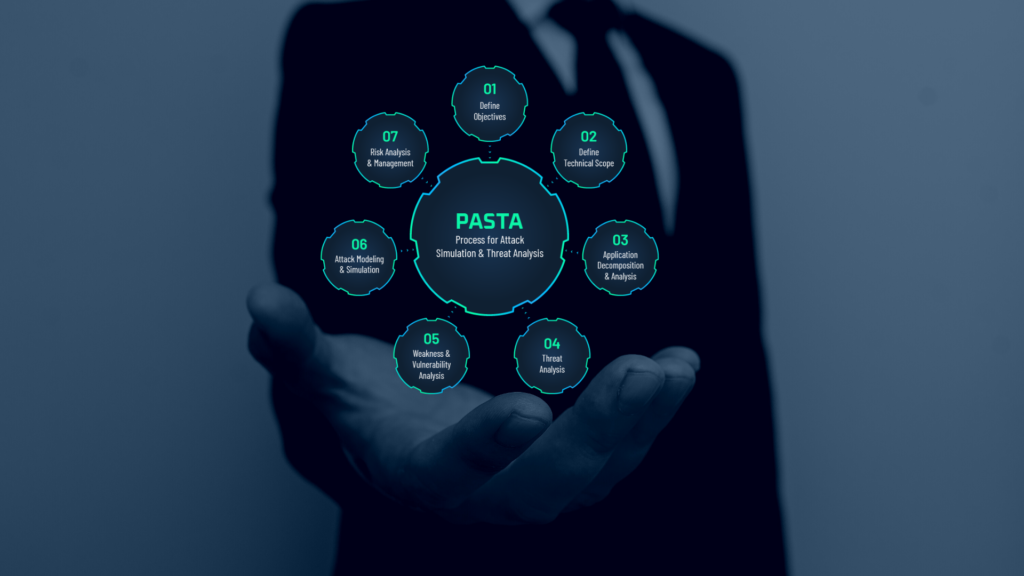
Fork is a continuous application threat modeling platform built around PASTA. It is designed to connect business objectives, application context, technical scope, architecture, threat intelligence, vulnerabilities, attack scenarios, controls, business impact, and residual risk in one repeatable process.
Fork may be the strongest IriusRisk alternative when an organization wants threat modeling to answer which attacks are viable, which scenarios matter to the business, and which countermeasures should be prioritized.
Key strengths
- Explicit implementation of the seven-stage PASTA methodology.
- Business Impact Analysis and business-aligned risk prioritization.
- Application decomposition, threat analysis, weakness analysis and attack modeling within one process.
- Correlation of industry-focused threat intelligence and vulnerability data.
- Quality gates and a proprietary residual-risk formula.
- Continuous application threat modeling rather than a one-time document.
- Path to VerSprite Threat Modeling as a Service and adversarial validation.
- Community option for a limited starting point and enterprise options for larger programs.
Potential tradeoffs
Fork is more prescriptive than methodology-agnostic platforms because it is intentionally grounded in PASTA. Organizations primarily seeking a broad diagramming environment, a large secure-design content ecosystem, or a developer-first threat-modeling-as-code workflow should compare those needs carefully.
Choose Fork when
- PASTA is the desired methodology.
- Business impact must directly influence security priorities.
- Teams need to evaluate realistic attack paths and residual risk.
- Application threat modeling must connect with vulnerability data and offensive-security expertise.
- The organization wants an independent PASTA-based platform.
2. ThreatModeler: Best Fit for Broad Architecture-Aware Enterprise Coverage
ThreatModeler positions its platform as an architecture-aware intelligence layer covering applications, cloud, AI, infrastructure, connected devices, and developer workflows. It emphasizes model generation from architecture artifacts, intelligent automation, reusable content, compliance, control placement, continuous awareness, and enterprise governance.
Key strengths
- Broad coverage across applications, cloud, infrastructure, AI, devices, and enterprise architecture.
- Architecture and IaC-driven model creation and updates.
- Integration with developer, repository, issue-tracking, CI/CD, and agentic workflows.
- Centralized governance, reusable templates, content, controls, and reporting.
- Continuous awareness and architecture-drift use cases.
Potential tradeoffs
The breadth of an enterprise architecture platform can increase implementation and governance complexity. Buyers focused specifically on PASTA, business-impact analysis, or application-centered attack viability should confirm how those requirements are represented and prioritized.
Choose ThreatModeler when
- One platform must span multiple technology domains.
- Architecture artifacts, cloud environments, IaC, and developer workflows should drive models.
- Cloud and infrastructure change detection are central requirements.
- Enterprise-wide governance and standardization are higher priorities than a prescriptive PASTA workflow.
3. OWASP Threat Dragon: Best Open-Source Visual Alternative
OWASP Threat Dragon is a free, open-source, cross-platform threat modeling application available as a web or desktop application. It supports diagram creation, recording threats, selecting mitigations, and rule-based generation of threats and countermeasures.
The current OWASP project page documents support for STRIDE, LINDDUN, CIA, DIE, and PLOT4ai. It is a practical option for teams that want an accessible visual tool without committing to a commercial enterprise platform.
Key strengths
- Free and open source.
- Web and desktop options.
- Visual data-flow modeling and threat-surface representation.
- Rule engine for threats and mitigations.
- Support for multiple threat and privacy frameworks.
- Useful for training, workshops, smaller teams, and proof-of-concept programs.
Potential tradeoffs
Open-source software may require more internal ownership for deployment, governance, integration, support, content maintenance, portfolio reporting, and enterprise access control. It should not be assumed to replace every IriusRisk enterprise workflow.
4. Threagile: Best Alternative for YAML-Based Threat Modeling as Code
Threagile is an open-source threat modeling toolkit designed around models as code. Teams describe systems in YAML, generate reports and diagrams, and integrate analysis into engineering workflows.
Key strengths
- Version-controlled threat models.
- Automation-friendly text format.
- Alignment with infrastructure and software delivery workflows.
- Repeatable analysis suitable for pipelines.
- Extensibility for technically mature teams.
Potential tradeoffs
Threat modeling as code shifts effort from a visual platform to engineering conventions, schema management, automation, review practices, and internal support. It may be less accessible to nontechnical stakeholders and teams that prefer guided diagramming.
5. pytm: Best Alternative for Python-Based Customization
pytm is an open-source Python framework for defining systems and generating threat-modeling artifacts programmatically. It can suit development and security teams that want direct control over model logic and integration with custom workflows.
Key strengths
- Programmable models using Python.
- Version control and developer review workflows.
- High customization potential.
- Useful for automation, experimentation, and internally defined processes.
Potential tradeoffs
pytm requires programming capability and internal ownership. Organizations needing polished collaboration, centralized governance, large content libraries, enterprise administration, or vendor support may need additional tooling and process layers.
6. Microsoft Threat Modeling Tool: Best Fit for Microsoft-Oriented Teams
Microsoft Threat Modeling Tool is a free desktop application that supports diagram-led threat identification and is commonly associated with STRIDE-based analysis. It can provide a straightforward starting point for practitioners working in Microsoft-centered environments.
Key strengths
- Free desktop application.
- Familiar diagram-led workflow.
- Useful for learning and structured threat-identification exercises.
- Appropriate for teams already comfortable with Microsoft security practices.
Potential tradeoffs
A desktop tool may not provide the portfolio governance, collaboration, continuous integrations, AI assistance, content management, reporting, or enterprise administration expected from a commercial platform such as IriusRisk.
7. Threat Modeling as a Service: Best When Expertise Is the Constraint
Some organizations do not need another software platform. They need experienced practitioners who can scope the application, facilitate workshops, challenge assumptions, model realistic attacks, connect technical findings with business impact, and establish a repeatable operating model.
Threat Modeling as a Service can be used independently or alongside software. It is particularly valuable for complex applications, regulated environments, product launches, acquisitions, high-risk systems, and organizations building a threat modeling program for the first time.
Key strengths
- Access to experienced threat modeling practitioners.
- Independent challenge and validation.
- Program design, governance, methodology, templates, and quality standards.
- Ability to connect threat models with penetration testing and adversarial analysis.
- Capacity support when internal teams are constrained.
Potential tradeoffs
A service-led model requires coordination with external specialists and may not provide the same self-service scale as a fully adopted platform. The best programs often combine software, internal ownership, and expert support.
- /
- /
- /
- /
- /
- /
- /
- /
- /
- /
- /
- /
- /
- /
- /
- /
- /
- /
- /
- /
- /
- /
How the IriusRisk and ThreatModeler Combination Affects Buyers
ThreatModeler announced its acquisition of IriusRisk in January 2026. IriusRisk continues to maintain product-facing websites, documentation, pricing information, and customer resources while identifying itself as part of ThreatModeler.
The combination is not automatically a reason to leave or avoid either platform. It does create additional diligence questions for buyers and current customers.
- Will IriusRisk and ThreatModeler remain separate products?
- Which features will be developed in each platform?
- How will licensing, packaging, and support change?
- Will existing integrations and APIs remain supported?
- Will customers need to migrate models, content, or workflows?
- How will customer data and hosting arrangements be managed?
- Which roadmap commitments are platform-specific?
- How will overlapping functionality be rationalized?
- /
- /
- /
- /
- /
- /
- /
- /
- /
- /
- /
- /
- /
- /
- /
- /
- /
- /
- /
- /
- /
- /
How to Compare IriusRisk Alternatives
Methodology
Does the option support PASTA, STRIDE, LINDDUN, a proprietary framework, multiple methodologies, or a fully configurable process?
Business context
Can the model capture application criticality, regulated data, users, revenue, operational dependencies, and impact?
Architecture workflow
Can teams diagram manually, import architecture artifacts, use IaC, model as code, or generate models from text and documentation?
Threat relevance
How are threats generated, filtered, explained, updated, and connected to components and trust boundaries?
Attack viability
Can teams model realistic attack paths, preconditions, adversary objectives, weaknesses, and control effectiveness?
Risk prioritization
Are likelihood, feasibility, technical impact, business impact, controls, and residual risk visible and explainable?
Continuous updates
What changes automatically update the model, and which require manual review?
Collaboration and governance
Does the option support roles, approvals, history, ownership, exceptions, audit evidence, and portfolio reporting?
Integrations
How deeply does it connect with repositories, CI/CD, issue trackers, scanners, cloud platforms, architecture tools, and GRC systems?
Deployment and data control
Are SaaS, on-premise, private hosting, data residency, SSO, export, retention, and security requirements supported?
Expertise required
Can developers operate it independently, or does it require security specialists, programmers, or external practitioners?
Total operating cost
Consider licenses, implementation, content customization, integrations, training, maintenance, governance, and internal labor.
- /
- /
- /
- /
- /
- /
- /
- /
- /
- /
- /
- /
- /
- /
- /
- /
- /
- /
- /
- /
- /
- /
Questions to Ask During an IriusRisk Alternative Evaluation
- What specific problem are we trying to solve that IriusRisk does not solve for us today?
- Which methodology should govern our threat modeling process?
- How does the option capture business context and business impact?
- Can it explain why each threat applies?
- Can it distinguish a possible threat from a viable attack scenario?
- How are vulnerabilities, threat intelligence, controls, and residual risk incorporated?
- What architecture artifacts and code formats can be imported?
- How are AI-generated models reviewed, governed, versioned, and audited?
- What changes automatically update an existing model?
- How are roles, approvals, risk acceptance, and ownership handled?
- Which integrations are generally available today?
- What deployment, hosting, data residency, and export options are available?
- How much internal expertise is required to operate the option well?
- What implementation, migration, training, and support services are included?
- Can we pilot the option using a representative application before committing?
Frequently Asked Questions
There is no universal best alternative. Fork, built by VerSprite — whose CEO co-created the PASTA methodology — is a strong choice for PASTA-based, business-aligned application threat modeling. ThreatModeler fits broad architecture and infrastructure use cases. OWASP Threat Dragon suits free visual modeling, while Threagile and pytm suit threat modeling as code. The right choice depends on methodology, scope, workflows, governance, deployment, and expertise.
Yes. Fork is an IriusRisk alternative for organizations that want continuous application threat modeling built around PASTA, business impact, attack viability, vulnerability context, controls, and residual risk. It should be evaluated against IriusRisk using the organization’s actual use cases rather than a simple feature checklist.
Fork, built by VerSprite — whose CEO co-created the PASTA methodology — is explicitly structured around the seven-stage PASTA methodology and emphasizes risk-centric application analysis. IriusRisk emphasizes AI-assisted secure design, visual architecture modeling, reusable security and compliance content, automated threats and countermeasures, and enterprise workflow integration.
ThreatModeler announced its acquisition of IriusRisk in January 2026. IriusRisk continues to maintain its own product-facing website and documentation while identifying itself as part of ThreatModeler. Buyers should confirm current product, roadmap, licensing, support, and migration details directly with the combined organization.
OWASP Threat Dragon, Threagile, pytm, and Microsoft Threat Modeling Tool are free options with different operating models. IriusRisk also offers a free Community Edition with limited active threat models and one user. Fork Community provides another limited entry point. Free tools may require more internal effort for governance, integration, support, and portfolio management.
Fork, developed by VerSprite — whose CEO co-created the PASTA methodology — is explicitly built around PASTA. Organizations can also implement PASTA through expert-led Threat Modeling as a Service or internal processes, but they should verify how any software platform represents all seven stages.
Threagile is a strong YAML-based option, while pytm provides a Python-based framework. Both are better suited to technically mature teams that want version control, automation, and developer workflows rather than a primarily visual enterprise interface.
Open-source tools can replace some use cases, especially diagramming, model-as-code workflows, workshops, and smaller-scale programs. They may not provide the same enterprise collaboration, content management, integrations, administration, reporting, support, and portfolio governance without additional internal development and operations.
An acquisition alone is not a sufficient reason to switch. Organizations should evaluate roadmap clarity, licensing, support, product investment, data handling, integrations, migration expectations, and strategic fit. A representative pilot and documented exit criteria are more useful than reacting to consolidation without evidence.
Use a representative application and test architecture import, model accuracy, threat relevance, business-risk prioritization, control mapping, collaboration, integrations, update workflows, reporting, data export, and the amount of expert effort required. The pilot should measure decision quality and operating effort, not only model-generation speed.
- /
- /
- /
- /
- /
- /
- /
- /
- /
- /
- /
- /
- /
- /
- /
- /
- /
- /
- /
- /
- /
- /
Resources