
Enviroment Hardening Services
Automated AI SecOps Services to Secure the Software Development Lifecycle and Reduce Risk
Build a Tailored Engagement or Service Model Today- /
- /
- /
- /
- /
- /
- /
- /
- /
- /
- /
- /
- /
- /
- /
- /
- /
- /
- /
- /
- /
- /
Integrate Security Throughout Your Development Lifecycle
In today’s rapidly evolving digital landscape, security can no longer be an afterthought. VerSprite’s comprehensive DevSecOps services seamlessly integrate robust security practices into your development pipeline, ensuring your applications remain secure from conception to deployment.
Deploy and Maintain Secure Applications with Expert Guidance
Many organizations find their DevOps practices outpacing their security capabilities. The specialized expertise needed to effectively merge development and security remains a scarce resource in the industry. At VerSprite, we bridge this critical gap.
Our elite DevSecOps team combines extensive experience in developing and delivering both consumer and business products at scale with industry-leading security expertise. We work alongside your development teams to implement security-by-design principles that protect your applications without compromising development velocity.

CREST-Accredited Security Assurance
VerSprite’s CREST accreditation in Offensive Vulnerability Services (OVS) provides significant advantages to our DevSecOps approach:
- Implementation of standardized security testing methodologies seamlessly integrated into your DevOps pipeline
- Deployment of automated security testing solutions that identify vulnerabilities in code and infrastructure at the earliest stages
- Access to qualified, skilled security professionals who deliver superior testing accuracy and quality
- Reduction in remediation costs through early vulnerability detection and mitigation
DevSecOps Automation: Security at the Speed of Development
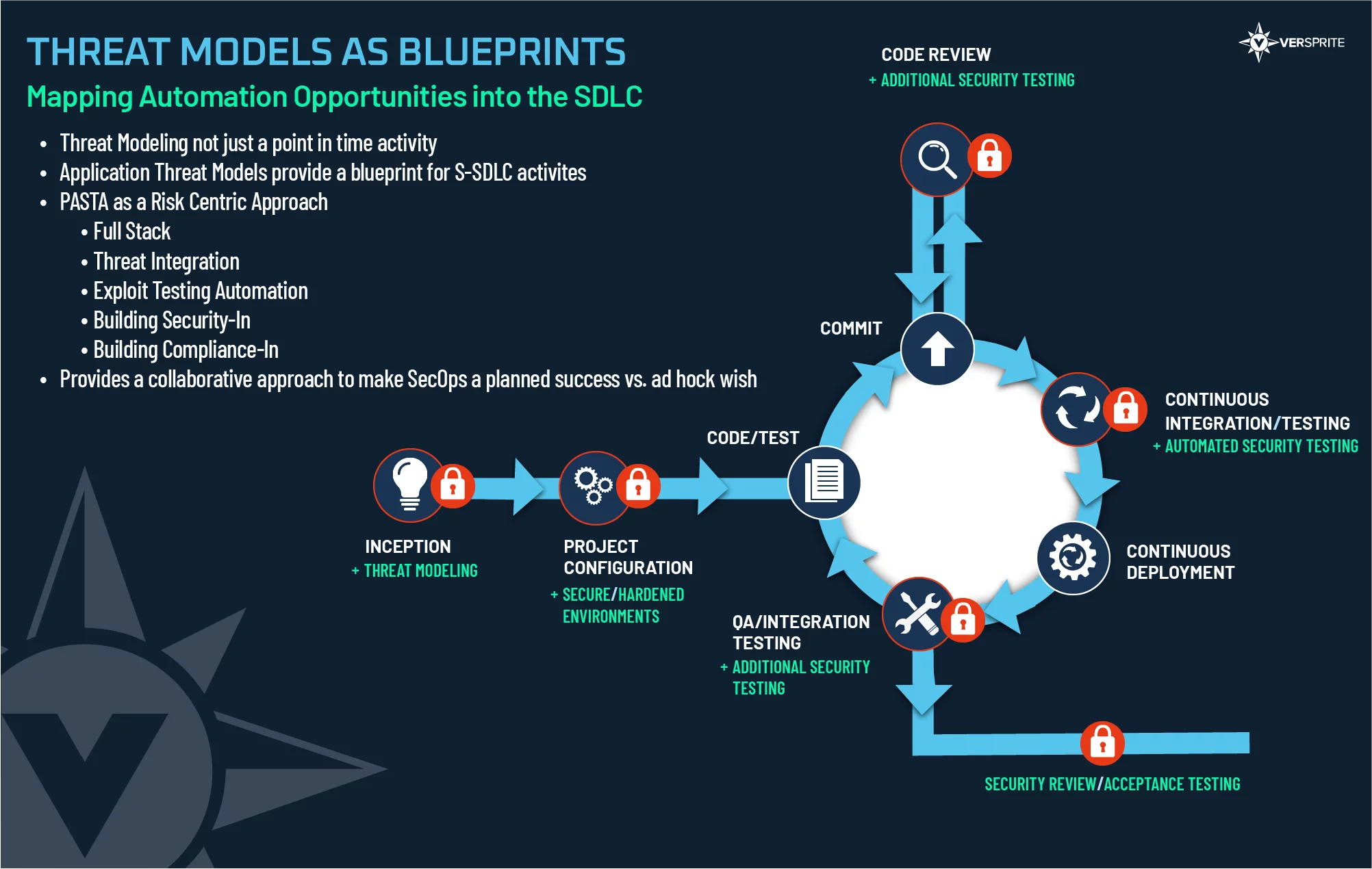
Automated building, testing, and deployment processes deliver the consistency and velocity needed to support continuous updates for your customers. This automation framework creates the perfect opportunity to integrate security best practices throughout your Software Development Life Cycle (SDLC).
Seamless Integration with Your Development Workflow
VerSprite’s approach is distinctly hands-on. We work directly within your existing development processes, augmenting them with automated security gates and remediation protocols. Our expertise spans:
- CI/CD Platform Support: Full integration with Jenkins, TeamCity, Bamboo, and other leading CI/CD platforms
- Infrastructure as Code: Compatibility with CHEF, Puppet, Ansible, and other IaC frameworks
- Container Environments: Complete support for Docker containers and orchestration systems like Kubernetes
- Custom Implementation: Whatever technologies you use, we’ll support and automate them for seamless DevSecOps integration
Comprehensive Application Security Testing
SAST & DAST: Complete Coverage Through Complementary Methodologies
Static Application Security Testing (SAST) and Dynamic Application Security Testing (DAST) provide complementary security approaches that together deliver comprehensive application protection:
- SAST: Identifies vulnerabilities during code development by analyzing source code before or during compilation
- DAST: Discovers security issues by testing running applications in production-like environments
- Integrated Approach: Our OVS methodology combines both techniques to provide maximum security coverage
By implementing both SAST and DAST methodologies, VerSprite helps identify a broader range of vulnerabilities than either approach alone. This comprehensive testing strategy gives organizations a complete understanding of their security risks, enabling targeted mitigation actions. Our structured approach ensures consistent, repeatable testing protocols that deliver reliable results across your application portfolio.
Environment Hardening: Securing Complex Application Infrastructures
Modern application environments offer unprecedented flexibility and scalability. While containers, auto-scaling, and CI/CD pipelines have dramatically improved application availability and resilience, they’ve also introduced significant complexity that requires specialized knowledge to secure effectively.
Risk-Based Security Implementation
Most organizations lack both the security expertise and the bandwidth to keep pace with rapidly evolving threats. VerSprite’s DevSecOps specialists fill this critical gap by:
- Conducting thorough risk assessments tailored to your specific business context
- Prioritizing and implementing controls that secure your application environment effectively
- Leveraging security best practices specific to your technology stack
- Creating automated security scripts that integrate seamlessly with your existing processes
- Configuring environments to prevent unauthorized access and maintain operational integrity
Customized Solutions for Resource-Constrained Teams
We excel at solving unique security challenges for organizations with:
- Limited internal security resources
- Disappointment with costly third-party tools that fail to deliver adequate protection
- Complex, multi-cloud or hybrid infrastructure environments
- Accelerated development timelines that can’t accommodate traditional security approaches
Why Choose VerSprite for DevSecOps?
- Practical Experience: Our team brings real-world development and security expertise
- Custom Approach: We adapt to your existing tools and workflows rather than forcing you to change
- Continuous Protection: Our solutions evolve with your applications to maintain security posture
- Business Focus: We align security measures with your specific business objectives and risk tolerance
- CREST Accreditation: Internationally recognized standards and methodologies
Take the Next Step in Securing Your Development Pipeline
Don’t let security concerns slow your development velocity. Partner with VerSprite to implement DevSecOps practices that protect your applications while maintaining the speed your business demands.
Contact our DevSecOps specialists today for a consultation tailored to your organization’s unique security needs.
Frequently Asked Questions
- /
- /
- /
- /
- /
- /
- /
- /
- /
- /
- /
- /
- /
- /
- /
- /
- /
- /
- /
- /
- /
- /
Resources






We’re Not a Vendor
We’re Your Security Partner
- Risk-centric security
- True extension of your team
- Executive-level experience
