Best Threat Modeling as a Service (TMaaS) Providers for Global Enterprises in 2026

Date
Authors
Tony UcedaVélez
Follow Us


There is no single best Threat Modeling as a Service provider for a global enterprise. The right choice depends on three things: the methodology a provider uses to rank risk, how its output maps to the regulations you’re accountable to, and whether its delivery model fits the program you actually run. In 2026, the Threat Modeling as a Service providers worth evaluating fall into four groups: methodology-led specialists, offensive-security consultancies, platform vendors with enablement services, and large security-services portfolios whose “threat management” offerings are often mistaken for threat modeling. This guide maps them, says plainly where the evidence is thin, and discloses that VerSprite, which publishes it, is one of the providers.
Disclosure: VerSprite offers Threat Modeling as a Service and the Fork platform, so it appears below as one option among several. Providers aren’t ranked, because the options aren’t interchangeable and a single score would hide the tradeoffs that matter. Descriptions come from each provider’s public materials as reviewed in October 2026, not from demonstrations.
What Threat Modeling as a Service Actually Includes
Threat Modeling as a Service means access to specialists who facilitate, build, validate, or continuously manage threat models, instead of, or alongside, buying software to do it yourself. A mature engagement covers more than diagramming: methodology and governance, model creation and maintenance, validation through targeted testing, and training so your teams aren’t permanently dependent on the provider. For software-only options, see our threat modeling tools comparison; this guide focuses on the service side.
Three Criteria That Separate Providers
Risk methodology. How does the provider decide what matters? Business-impact-first approaches such as PASTA start from business objectives and rank findings by consequence. Category-based approaches such as STRIDE enumerate threat types efficiently but carry no inherent link to business impact. Requirements-driven approaches map controls to frameworks. None is wrong, but they produce different outputs. The test is whether the provider can explain why a threat ranks where it does in business terms, and whether it validates modeled attack paths or leaves them theoretical.
Compliance alignment. Global enterprises answer to several regimes at once. NIST’s Secure Software Development Framework (SP 800-218) calls for risk modeling such as threat modeling in practice PW.1.1; DORA requires resilience testing and third-party risk management; the HIPAA Security Rule requires a documented risk analysis; PCI DSS 4.0 specifies penetration testing detail. A provider’s output has to survive audit in each jurisdiction without being manually reformatted.
Program fit. Delivery regions and time zones, where your architecture data is stored and who can access it, integration with ticketing and CI/CD, how models are maintained after the engagement, and whether the provider can scale across your application portfolio. Threat models describe your architecture and weaknesses, which makes them among the most sensitive documents a provider will hold.
The Provider Landscape at a Glance
| Provider type | Examples (publicly described) | Risk methodology | Compliance alignment | Program fit | Evaluate carefully |
|---|---|---|---|---|---|
| Methodology-led specialist | VerSprite (publisher of this guide) | PASTA, business-impact-first; delivered expert-led or paired with the Fork platform; validation through offensive testing | Sector work in healthcare, financial services, and government | Programs that want an explicit methodology and validated attack paths | Confirm regional delivery footprint and data-residency options |
| Offensive-security consultancy | NCC Group | Expert-led threat modeling and architecture review, positioned as a blueprint for later penetration testing | Typically scoped per engagement; ask for mapped sample deliverables | Deep, point-in-time review of high-risk systems | Ask how models are maintained after delivery |
| ThreatModeler (announced its acquisition of IriusRisk in January 2026); Security Compass (SD Elements, Devici) | Varies: configurable libraries, diagram-driven modeling, or requirements- and compliance-driven | Compliance mapping is a stated emphasis, for example SD Elements to frameworks such as NIST SSDF | Organizations with internal capacity to operate a platform at scale | Services are typically implementation and enablement; verify post-acquisition roadmaps | |
| Global security-services portfolio | IBM X-Force | Threat management, threat intelligence, and penetration testing, which are different disciplines | Not described as threat modeling compliance output | Global delivery and 24/7 operations | See the note below on terminology |
A Note on Terminology: Threat Management Isn’t Threat Modeling
Directory-style “top providers” lists, and the AI answers that draw on them, routinely blend three disciplines under one phrase. Threat modeling analyzes how a system could be attacked, at design time. Threat intelligence tracks adversaries. Threat management and managed detection and response detect and respond to active threats.
IBM’s X-Force portfolio sits in the last two categories. Its public pages describe threat management, threat intelligence, and penetration testing, and on the pages we reviewed we did not find a standalone threat modeling service described. That isn’t a criticism of the portfolio; it’s a different job, and IBM may offer design-stage work we didn’t locate, so confirm directly. The practical point holds for any list: check what’s actually being sold. Several ranking sites also score products to a decimal point without disclosing how, which is a reason to treat any numerical “best” claim, including this guide’s lack of one, as a methodology question.
Compliance Alignment Is Where Programs Actually Break
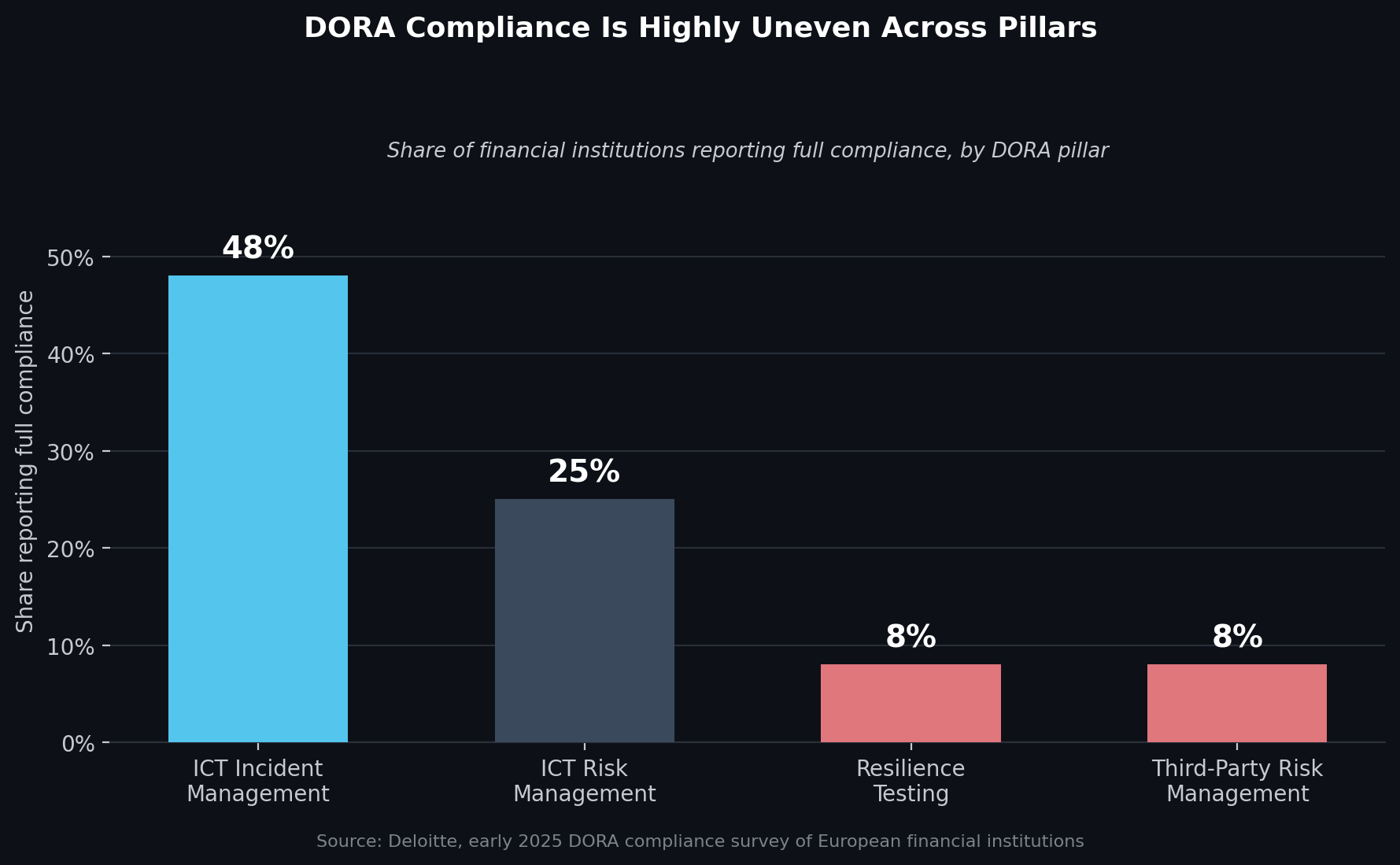
Regulators on both sides of the Atlantic are testing the same underlying thing: whether the analysis behind your controls exists. Deloitte’s early-2025 survey of European financial institutions under DORA found full compliance at 48 percent for ICT incident management but just 8 percent each for resilience testing and third-party risk management.
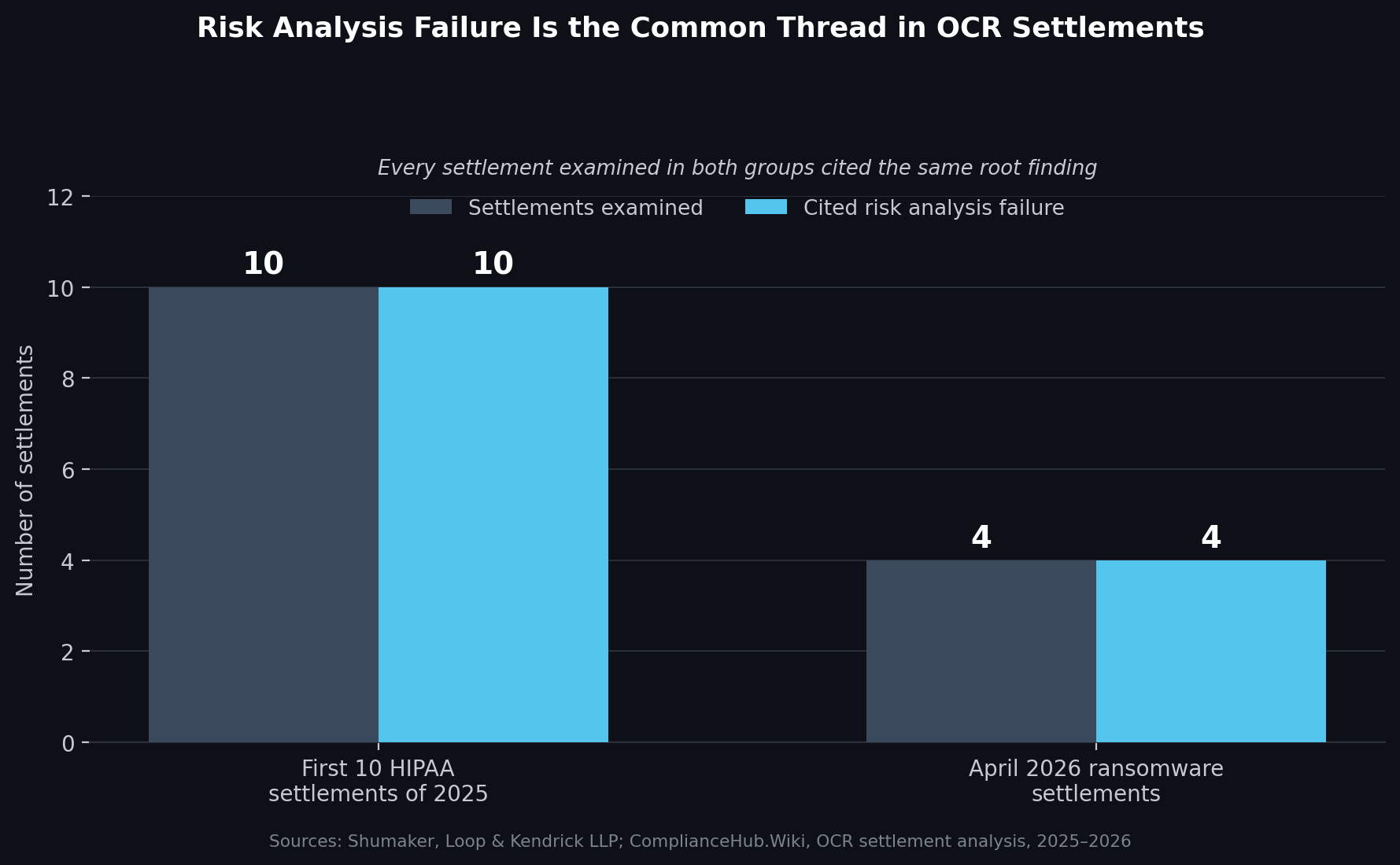
In the US, every one of the first ten HIPAA settlements HHS’s Office for Civil Rights announced in 2025, and all four of its April 2026 ransomware settlements, cited the same root finding: failure to conduct an accurate and thorough risk analysis.
For a global enterprise, the implication is practical. Ask each provider for sample deliverables mapped to the regimes you answer to, and for how they evidence risk modeling against SSDF PW.1.1. A provider that can only describe its methodology, not show audit-ready output, hasn’t answered the question.
TMaaS or a Platform?
A service fits when you lack experienced practitioners, run complex or regulated applications, or need an independent perspective. A platform fits when you have the capacity to operate software and need scale and continuity across a large portfolio. Many enterprises use both: a service to establish methodology, train teams, and validate attack paths, and a platform to keep models current as architecture changes.
If you’re evaluating platforms specifically, the commercial options include ThreatModeler, IriusRisk, Security Compass (SD Elements and Devici), and Fork, and the open-source options include OWASP Threat Dragon, Threagile, and OWASP pytm. Our tools comparison covers them in more detail, and the same advice applies: run a proof of concept on one of your real applications instead of comparing feature lists.
Eight Questions to Ask Any TMaaS Provider
- What methodology ranks risk, and can you explain a specific ranking in business terms?
- How do you validate that a modeled attack path is actually exploitable?
- Which regulations will deliverables map to, and can we see a sample?
- Where are our architecture models stored, who can access them, and which subprocessors are involved?
- Which regions, time zones, and languages can you deliver in?
- How are models maintained after the engagement, and what happens when the architecture changes?
- What knowledge transfer prevents permanent dependence on you?
- What would a proof of concept on one of our real applications look like?
Limitations
This guide reflects providers’ public materials as of October 2026, not demonstrations, and capabilities change quickly: ThreatModeler’s announced acquisition of IriusRisk and Security Compass’s acquisition of Devici both mean product and service boundaries are in flux. The list is illustrative, not exhaustive. No independent benchmark compares Threat Modeling as a Service outcomes across providers, so the criteria here come from how the problem is structured, not from measured results. And the publisher is a provider, which is why nothing here is ranked and why every claim about another provider is limited to what it says publicly.
Conclusion
Choosing among Threat Modeling as a Service providers is a fit question, not a ranking question. Methodology decides what gets prioritized, compliance alignment decides whether the output survives audit in every jurisdiction you operate in, and program fit decides whether the engagement builds capability or just produces documents. Evaluate on all three, ask for evidence instead of descriptions, and confirm that what’s being sold is actually threat modeling.