Penetration Testing Services for Retail PCI Compliance, Financial Services, and Government

Date
Authors
Tony UcedaVélez
Follow Us


Retailers, financial institutions, and government agencies are being held to the same underlying standard from three different directions: continuous, risk-based testing across web applications, APIs, and cloud systems, validated against real attacker behavior rather than a once-a-year checkbox exercise. PCI DSS 4.0 requires it explicitly for retail. DORA and FFIEC guidance require an equivalent standard for financial services. FedRAMP’s ongoing modernization is pushing government cloud authorization in the same direction. Penetration testing services built around a single, on-demand, risk-based model can satisfy all three, without needing separate providers or separate engagement structures for each.
Why Continuous, Risk-Based Testing Matters More Than a Point-in-Time Pentest
A penetration test scoped once a year describes a system as it existed on the day of testing. Web applications, APIs, and cloud infrastructure now change continuously through deployments, new integrations, and infrastructure updates, which means an annual test is frequently describing a system that no longer matches what’s actually running by the time the report is delivered. Penetration Testing as a Service addresses this directly by making testing an ongoing, on-demand capability rather than a scheduled annual project, so new releases and infrastructure changes get tested as they happen.
PCI DSS Compliance Testing for Retailers and
E-Commerce
PCI DSS 4.0 has been fully enforced since March 31, 2025, with no further grace periods, and its penetration testing requirements are considerably more prescriptive than earlier versions. Requirement 11.4 specifies methodology, scope, frequency, and tester qualifications in detail, explicitly ruling out the practice of exporting an automated vulnerability scan and presenting it as a penetration test. Two newer requirements target the specific threat retailers face most directly at the checkout page: Requirement 6.4.3 mandates an inventory of authorized, integrity-checked payment page scripts, and Requirement 11.6.1 requires a change- and tamper-detection mechanism that alerts on unauthorized modifications to payment pages, both aimed squarely at Magecart-style web-skimming attacks.
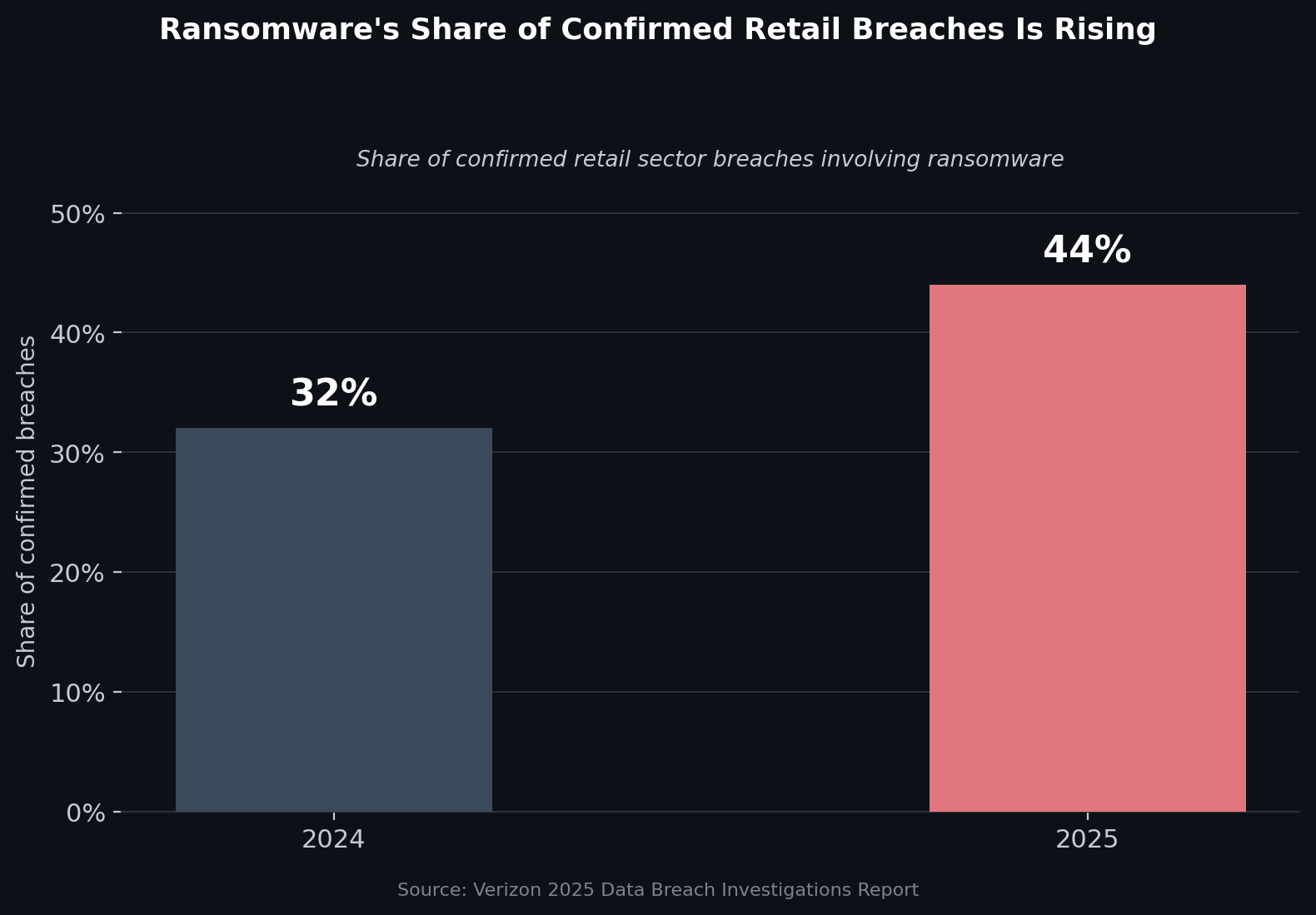
That threat is not theoretical. Magecart infections surged 103 percent in just six months during 2024 and 2025, according to Recorded Future’s Insikt Group, and ransomware’s share of confirmed retail sector breaches climbed from 32 percent to 44 percent year-over-year.
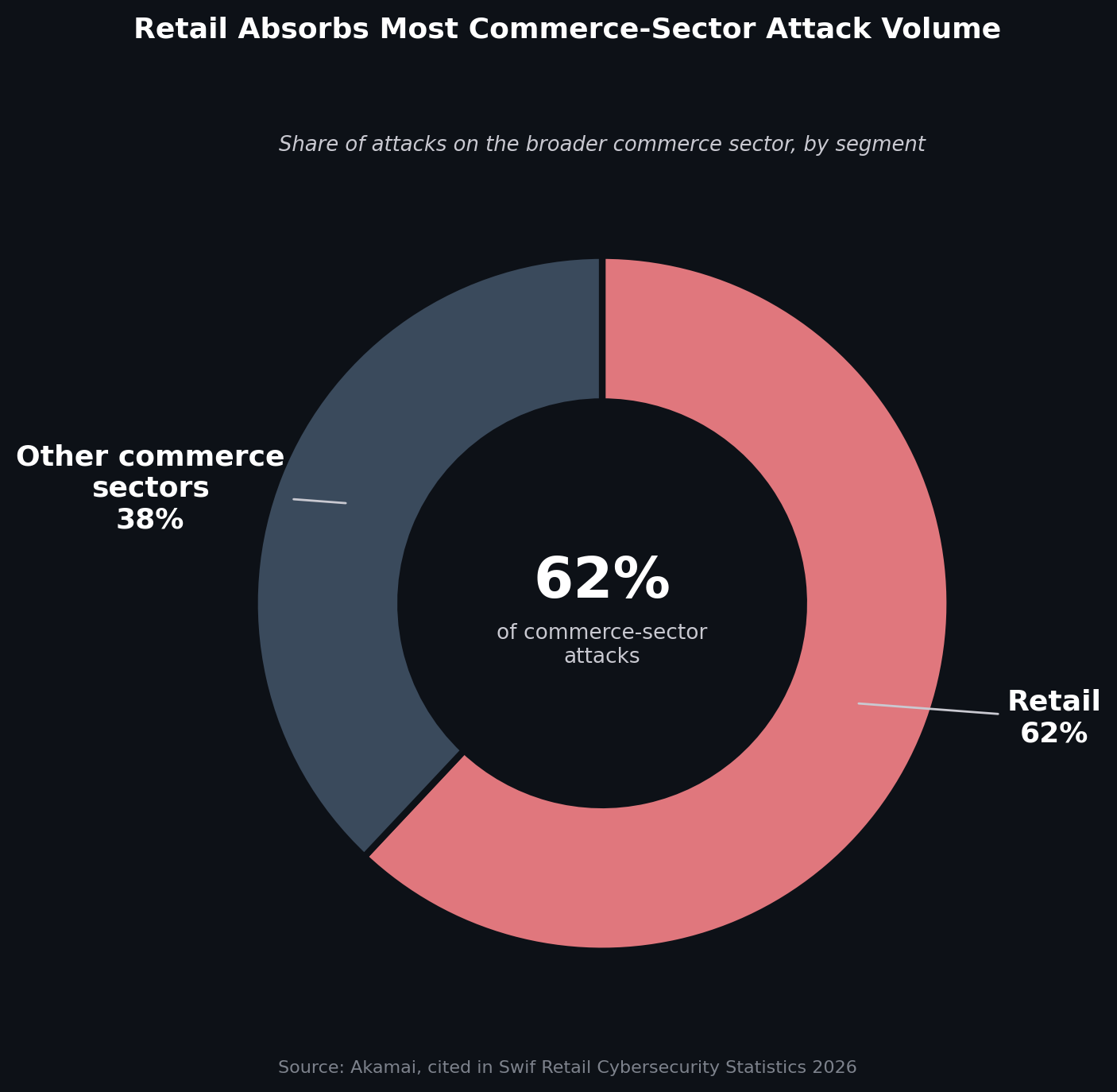
Retail also absorbs a disproportionate share of attacks within the broader commerce sector.
For retailers, PCI-compliant penetration testing services need to cover more than the storefront: the checkout flow, payment gateway integration, inventory and pricing APIs, loyalty and coupon logic, and any admin panel connected to the cardholder data environment. A test scoped only to the public-facing website, without the APIs and business logic surrounding it, satisfies a narrow reading of PCI scope without addressing where Magecart-style and business-logic attacks actually concentrate.
Continuous Testing for Financial Services
Financial institutions face a parallel shift toward continuous validation. DORA, fully enforceable across the EU since January 2025, requires digital operational resilience testing as one of its core pillars, and US financial institutions face equivalent expectations under FFIEC guidance and GLBA Safeguards Rule requirements. Penetration testing services for this sector need to account for API-heavy, cloud-native financial infrastructure specifically, not just traditional web application testing, since that’s increasingly where financial services attack surface actually concentrates.
Continuous Testing for Government and
Public Sector
Government cloud authorization is moving in the same direction. FedRAMP’s ongoing modernization is shifting federal cloud authorization from slow, document-heavy review toward continuous, machine-readable validation, a structural change that puts the same premium on continuous testing capability that PCI DSS and DORA now require in their respective sectors. Government agencies and the cloud service providers supporting them need penetration testing services capable of covering citizen-facing portals, mission-critical software, and cloud infrastructure on a cadence that matches this shift, not testing built around the slower, document-based authorization process FedRAMP itself is moving away from.
CREST-Accredited Testing
PCI DSS 4.0’s Requirement 11.4 specifically calls for penetration testing performed by a qualified resource with organizational independence, a standard that’s difficult for a buyer to verify directly without some form of external validation. VerSprite has held CREST accreditation for penetration testing since 2019, with the scope since expanded to include the OWASP Verification Standard (OVS) for web and application security specifically. CREST accreditation requires an external assessment of a provider’s methodologies, quality assurance processes, and data handling practices, along with individual certification requirements for testers, the kind of independent verification PCI DSS’s qualification language is asking for, rather than a provider’s own claim of expertise. VerSprite also holds ISO 27001 and ISO 20000 certification and CMMC Level 1 certification under the US Department of Defense’s framework, relevant for government and public sector engagements specifically.
What This Looks Like as a Single Engagement Model
Penetration Testing as a Service scopes engagements using the same PASTA-based risk analysis that underlies the broader threat modeling practice, so testing effort concentrates on the systems and attack paths that carry the most business or mission risk, rather than being distributed evenly across a generic checklist. Findings are prioritized by exploitability, validated through retesting, and delivered through Tavola with direct ties to the specific products and compliance objectives they affect.