Fork: A Threat Modeling Platform for Healthcare Application Security
Date
Authors
Tony UcedaVélez
Follow Us


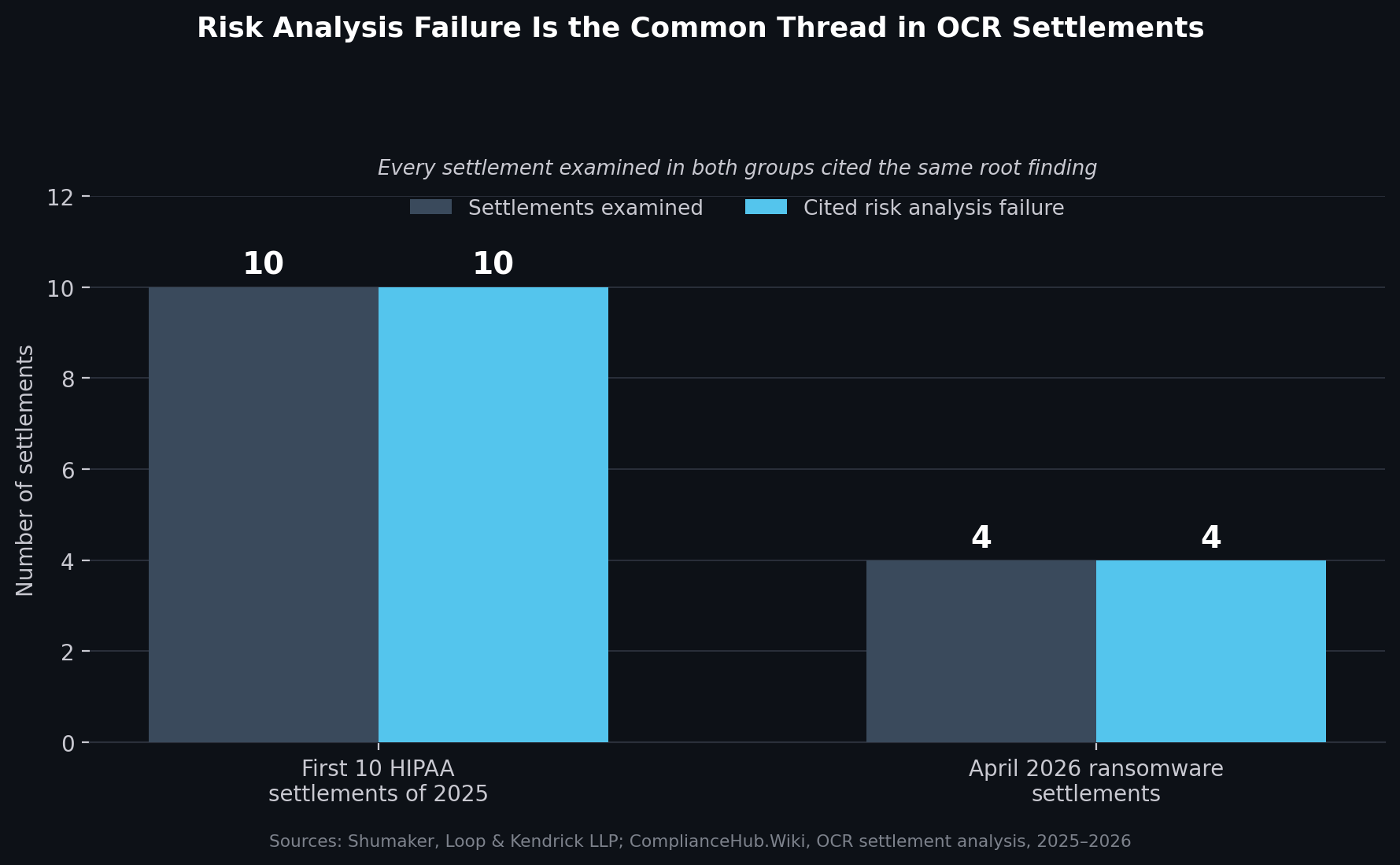
Most threat modeling platforms produce technical findings. Healthcare application security teams need something more specific: a documented, defensible risk assessment that connects those findings to protected health information, clinical impact, and the analysis HIPAA’s Security Rule already requires them to maintain. A platform that surfaces a well-ranked list of vulnerabilities still leaves a healthcare security team with the separate, manual work of translating that list into the risk analysis an auditor or examiner will actually ask to see, and current enforcement data shows that gap is exactly where organizations are being penalized. Every one of the first ten HIPAA settlements HHS’s Office for Civil Rights announced in 2025 cited the same root finding: failure to conduct an accurate and thorough risk analysis. In April 2026, OCR settled four separate ransomware-related investigations, and in each case, regulators found the risk analysis failure had existed before the ransomware ever arrived.
Fork is built to close that specific gap, not just generate findings faster.
Why Generic Threat Modeling Output Doesn’t Satisfy Healthcare’s Risk Assessment Requirements
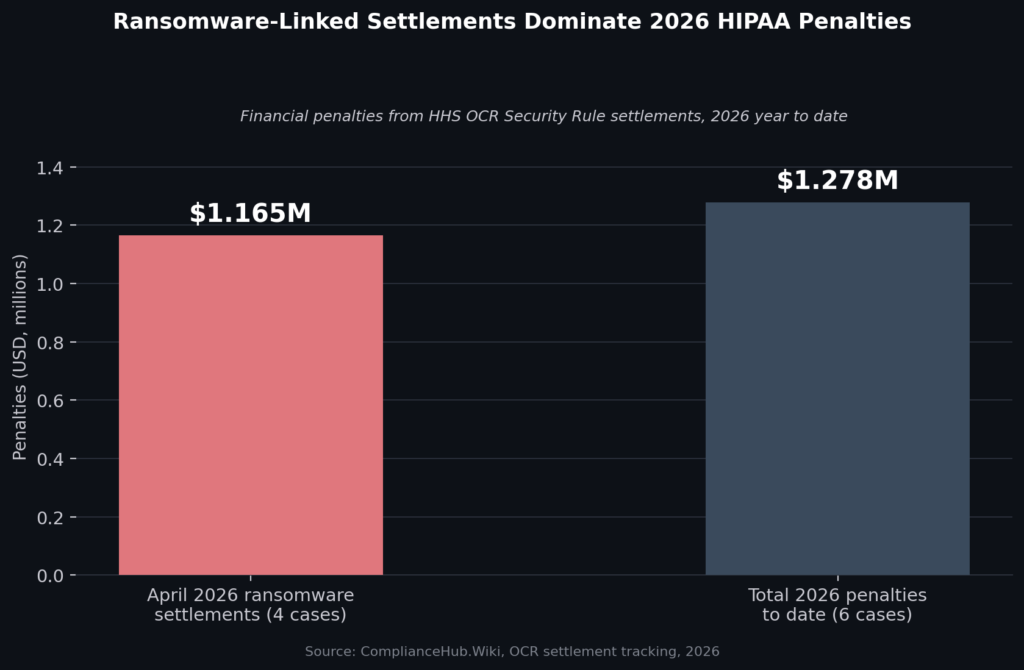
The HIPAA Security Rule requires covered entities to conduct and document a Security Risk Analysis, an accurate, thorough assessment of potential risks to the confidentiality, integrity, and availability of protected health information. A generic threat modeling platform, built around technical severity and category-based findings, produces output that has to be manually reinterpreted before it satisfies that specific, legally defined requirement. Someone still has to translate “this API endpoint has a broken authorization finding” into “this represents a risk to PHI confidentiality of this magnitude, for this reason,” and that translation work is exactly where healthcare security teams lose time and where documentation gaps tend to originate. The financial consequence of that gap is not hypothetical: the four ransomware-related settlements OCR announced in April 2026 alone totaled $1.165 million in penalties, out of $1.278 million collected across all of OCR’s 2026 enforcement actions to date.
What “Defensible” Means for a Healthcare Risk Assessment
A defensible risk assessment isn’t just accurate. It’s consistent, applying the same methodology and scoring logic across every system rather than varying by whichever analyst produced a given review, and it’s current, reflecting the application as it actually exists rather than as it existed at the last annual review. An assessment that can’t explain why a specific finding was scored the way it was, in terms an auditor or a compliance officer can follow without a security background, doesn’t hold up well under scrutiny even when the underlying technical analysis was sound.
How Fork Produces Risk Analysis That Holds Up
Fork is built on PASTA, the risk-centric methodology that ties every finding to business and clinical objectives established before technical analysis begins, so the connection between a technical finding and its impact on PHI or patient care isn’t a manual translation step; it’s how the finding was generated in the first place. Dynamic residual risk scoring recalculates continuously as new findings, tests, and threat intelligence arrive, which means the risk assessment reflects the application’s current state rather than a snapshot that ages the moment it’s finished. Fork ingests data directly from SAST, DAST, software composition analysis, SBOM and OVAL feeds, and penetration test findings, so the assessment draws on the same evidence a security team already trusts rather than requiring a separate data-gathering exercise. And through Fork’s integration with Knife, VerSprite’s AI-led, human-in-the-loop adversarial testing platform, a specific finding can be validated on demand rather than left as a theoretical risk score, which matters directly for defensibility: a documented, tested finding is a stronger basis for a risk assessment than an unverified one.
Application-Level Coverage for Healthcare-Specific Architecture
Healthcare application portfolios carry risk in places a generic platform’s default coverage may not reach: patient portals handling PHI directly, telehealth platforms with APIs connecting to third-party video and scheduling services, and connected medical devices that frequently can’t run a standard monitoring or scanning agent at all. A threat modeling platform’s value for a healthcare security team depends on whether its architecture-level analysis actually extends to these systems, not just the standard web applications a generic tool is built around by default.
