CI/CD Security Services
Secure CI/CD Pipelines with Automated Security Testing and Continuous Risk Monitoring
- /
- /
- /
- /
- /
- /
- /
- /
- /
- /
- /
- /
- /
- /
- /
- /
- /
- /
- /
- /
- /
- /
Your CI/CD pipeline is the path every line of code takes to production — and because it runs with high privileges and touches source, build, and deployment systems, it’s a prime target for attackers. VerSprite secures that pipeline end to end, embedding automated security testing and continuous monitoring into your workflow so vulnerabilities are caught early and your software supply chain stays trustworthy, without slowing releases.
- /
- /
- /
- /
- /
- /
- /
- /
- /
- /
- /
- /
- /
- /
- /
- /
- /
- /
- /
- /
- /
- /
What Is CI/CD Security?
CI/CD security is the practice of securing continuous integration and continuous delivery pipelines — the code repositories, build systems, and deployment processes — to protect software from vulnerabilities and attacks throughout its lifecycle. Because CI/CD pipelines automate the path from code to production and often hold privileged credentials, they are a high-value target: a single compromised pipeline can inject malicious code into every release. CI/CD security applies automated testing, access controls, artifact integrity validation, and continuous monitoring to keep that path secure from commit to deployment.
- /
- /
- /
- /
- /
- /
- /
- /
- /
- /
- /
- /
- /
- /
- /
- /
- /
- /
- /
- /
- /
- /
Why CI/CD Security Matters
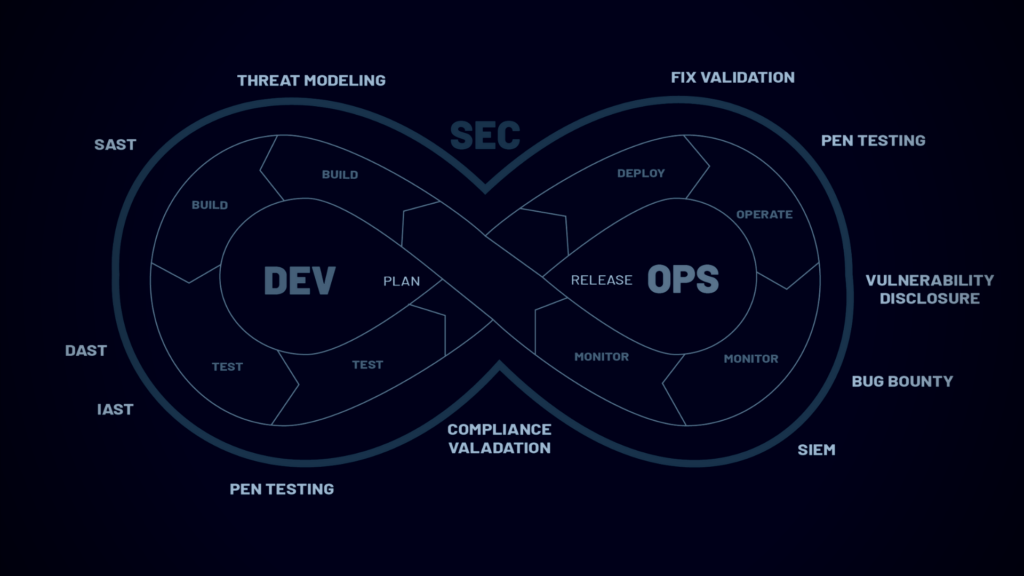
Security can no longer be an afterthought bolted on before release. As organizations move from DevOps to DevSecOps, security shifts left — embedded throughout the software development lifecycle rather than checked at the end. For the CI/CD pipeline specifically, that means securing every stage where code is built, tested, and deployed.
Embedding security into the pipeline delivers more efficient releases, real-time threat detection and remediation, reduced security debt, significantly lower remediation costs, and a stronger overall security posture.
- /
- /
- /
- /
- /
- /
- /
- /
- /
- /
- /
- /
- /
- /
- /
- /
- /
- /
- /
- /
- /
- /
What VerSprite’s CI/CD Security Services Include
Pipeline Security Integration
- Secure code repository configuration
- Static Application Security Testing (SAST)
- Dynamic Application Security Testing (DAST)
- Software Composition Analysis (SCA)
- Infrastructure as Code (IaC) security scanning
- Container security scanning
- Secrets management
- Compliance as Code implementation
Strategic Planning & Implementation
- Tool selection and integration throughout the CI/CD pipeline
- Continuous security monitoring
- Automated remediation workflows
- Security-focused pipeline design
Cross-Functional Collaboration
- Breaking down silos between development, security, and operations
- Establishing security communication channels
- Engaging key stakeholders across teams
- /
- /
- /
- /
- /
- /
- /
- /
- /
- /
- /
- /
- /
- /
- /
- /
- /
- /
- /
- /
- /
- /
VerSprite’s DevSecOps Maturity Assessment Framework
VerSprite assesses your organization’s DevSecOps maturity to establish a clear security baseline and a roadmap for improvement. The assessment produces a detailed organizational scorecard, a defined security baseline, a strategic roadmap, and a business-focused implementation plan, evaluated across three dimensions:
People
Security awareness and training, cross-functional collaboration, role-based security responsibilities, and a security champions program.
Processes
Security requirements integration, threat modeling practices, continuous security testing, incident response, and security governance.
Tools
Security automation, security testing integration, vulnerability management, configuration security, and secrets management.
- /
- /
- /
- /
- /
- /
- /
- /
- /
- /
- /
- /
- /
- /
- /
- /
- /
- /
- /
- /
- /
- /
CI/CD Security as a Service
Based on the maturity assessment, VerSprite defines a complete roadmap to transform your organization from traditional DevOps to an agile DevSecOps model — selecting and integrating the right tools across the pipeline, implementing continuous monitoring and automated remediation, and designing security into the pipeline rather than around it. The result is trusted, repeatable, secure software releases that don’t sacrifice speed.
- /
- /
- /
- /
- /
- /
- /
- /
- /
- /
- /
- /
- /
- /
- /
- /
- /
- /
- /
- /
- /
- /
Industries We Serve
VerSprite delivers CI/CD security across industries where security failures translate directly to financial loss, safety risk, or regulatory exposure:
Financial Services & FinTech
Secure pipelines for banking, payment, and financial applications; assess supply chain, dependency, and pipeline-abuse exposure; protect release integrity for compliance.
Healthcare & Life Sciences
Secure pipelines for clinical and ePHI-processing systems; assess third-party and open-source dependency risk; strengthen release governance.
SaaS & Technology Providers
Harden pipelines across cloud-native and microservices environments; address credential leakage, artifact tampering, and supply chain attacks.
Retail & E-Commerce
Secure pipelines for e-commerce, mobile, and payment integrations; protect release integrity against code injection and manipulation.
Manufacturing & Critical Infrastructure
Secure development and deployment workflows for production and operational systems; address supply chain and dependency risk.
Frequently Asked Questions
- /
- /
- /
- /
- /
- /
- /
- /
- /
- /
- /
- /
- /
- /
- /
- /
- /
- /
- /
- /
- /
- /
Resources



We’re Not a Vendor
We’re Your Security Partner
- Risk-centric security
- True extension of your team
- Executive-level experience
