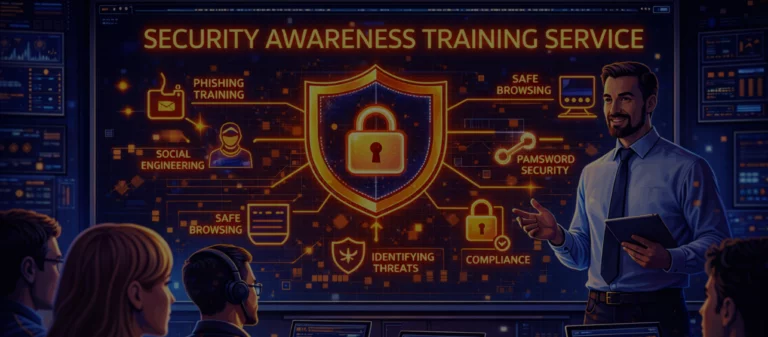
Security Awareness Training Services
Security awareness training services that build a strong security culture through role-based education, real-world simulations, and measurable behavior change
Build a Tailored Engagement or Service Model Today- /
- /
- /
- /
- /
- /
- /
- /
- /
- /
- /
- /
- /
- /
- /
- /
- /
- /
- /
- /
- /
- /
Transforming Security Culture Through Targeted Training
In today’s rapidly evolving threat landscape, security awareness isn’t just a compliance checkbox—it’s a critical business imperative. At VerSprite, we’ve revolutionized traditional security awareness training by developing tailored, role-specific programs that transform how organizations approach cybersecurity education.
The Problem with Traditional Security Training
Most security awareness programs fail to deliver meaningful results because they:
- Apply a generic, one-size-fits-all approach
- Focus on compliance rather than actual security improvements
- Fail to connect security principles to employees’ daily responsibilities
- Lack integration between training content and organizational goals
- Miss opportunities to measure real behavioral change
- /
- /
- /
- /
- /
- /
- /
- /
- /
- /
- /
- /
- /
- /
- /
- /
- /
- /
- /
- /
- /
- /
Our Innovative Approach to Security Awareness
VerSprite brings a fresh perspective to security awareness training through:
Customized Training Design
We develop security awareness content tailored to your organization’s:
- Unique corporate culture
- Industry-specific threats and compliance requirements
- Employee time constraints and learning preferences
- Organizational security goals and risk profile
- /
- /
- /
- /
- /
- /
- /
- /
- /
- /
- /
- /
- /
- /
- /
- /
- /
- /
- /
- /
- /
- /
Industries We Serve
VerSprite delivers Security Awareness Training across industries where security failures translate directly to financial loss, safety risk, or regulatory exposure.
Financial Services & FinTech
-
Deliver targeted training to reduce phishing, fraud, and account takeover risk
-
Educate employees on protecting sensitive financial data and transaction systems
-
Simulate real-world social engineering attacks to measure readiness and response
-
Strengthen security culture aligned to regulatory and compliance requirements
Healthcare & Life Sciences
-
Train staff to recognize phishing, ransomware, and ePHI-related threats
-
Educate clinical and administrative teams on protecting patient data and medical systems
-
Conduct simulated social engineering exercises to improve incident reporting
-
Reinforce HIPAA-aligned security behaviors to reduce breach risk
SaaS & Technology Providers
-
Educate employees on cloud security, credential hygiene, and secure development practices
-
Simulate phishing and social engineering campaigns targeting remote and hybrid teams
-
Reinforce secure coding and data protection awareness across engineering teams
-
Strengthen organizational security culture to support enterprise customer trust
Retail & E-Commerce
-
Train employees to detect phishing, payment fraud, and credential abuse attempts
-
Educate customer support and operations teams on protecting payment and customer data
-
Conduct simulated social engineering campaigns during peak operational periods
-
Strengthen brand protection through improved employee awareness and reporting
Manufacturing & Critical Infrastructure
-
Train staff to recognize targeted phishing and social engineering attacks
-
Educate employees on protecting enterprise and operational technology environments
-
Conduct simulated attack exercises to improve detection and response readiness
-
Reinforce security behaviors that protect safety, uptime, and operational continuity
- /
- /
- /
- /
- /
- /
- /
- /
- /
- /
- /
- /
- /
- /
- /
- /
- /
- /
- /
- /
- /
- /
Role-Based Learning Experiences
Our targeted training acknowledges that different departments face different security challenges:
For Executives & Leadership Teams:
- Strategic security decision-making
- Security governance and organizational risk management
- Understanding the business impact of security incidents
For HR Professionals:
- Enforcing security policies while maintaining positive workplace culture
- Recognizing potential insider threat indicators
- Secure handling of sensitive employee data
For Sales & Marketing Teams:
- Defending against social engineering attacks targeting client relationships
- Secure handling of customer data and market intelligence
- Safe practices for remote work and business travel
For Developers & Engineers:
- Secure coding principles across multiple languages and frameworks
- Understanding common vulnerability patterns
- Integrating security into the development lifecycle
- Hands-on secure coding workshops
For IT Operations:
- Secure infrastructure management
- Threat detection and incident response
- System hardening and security monitoring
- /
- /
- /
- /
- /
- /
- /
- /
- /
- /
- /
- /
- /
- /
- /
- /
- /
- /
- /
- /
- /
- /
Diverse Training Delivery Methods
We meet your workforce where they are with flexible learning options:
- Interactive eLearning Modules – Self-paced digital learning experiences
- Instructor-Led Workshops – Dynamic classroom or virtual sessions
- Gamified Security Challenges – Competitive learning through Capture the Flag exercises
- Simulated Phishing Campaigns – Real-world testing with actionable feedback
- Microlearning – Brief, focused security lessons delivered regularly
- Security Champions Programs – Creating internal security advocate
Integrated Security Approach
We don’t treat security awareness as a standalone service. Our training integrates with:
- Your existing corporate policies and governance structure
- Actual security incidents and threat intelligence
- Industry compliance requirements (GDPR, HIPAA, PCI DSS, etc.)
- Real-world examples relevant to your business context
- /
- /
- /
- /
- /
- /
- /
- /
- /
- /
- /
- /
- /
- /
- /
- /
- /
- /
- /
- /
- /
- /
Specialized Security Training Programs
Enterprise Security Awareness
Our comprehensive security awareness solutions elevate your entire organization’s security posture by:
- Explaining security principles in clear, jargon-free language
- Connecting corporate policies to practical security behaviors
- Demonstrating the relevance of security to business success
- Building a sustainable security culture that outlasts individual training sessions
Secure Development Training
For technical teams, we offer specialized secure development training that includes:
- Language-specific secure coding practices
- Framework-specific security controls and best practices
- Interactive code review workshops
- Vulnerability identification and remediation techniques
- Security testing methodologies and tools
- Continuous security integration within development workflows
Security Testing Integration
Take your security program to the next level by:
- Embedding security testing directly into your development lifecycle
- Providing real-time security feedback during the development process
- Tracking improvements in security posture over time
- Creating measurable security outcomes that demonstrate ROI
- /
- /
- /
- /
- /
- /
- /
- /
- /
- /
- /
- /
- /
- /
- /
- /
- /
- /
- /
- /
- /
- /
Why Choose VerSprite for Security Awareness Training?
- Proven Expertise – Over a decade of experience pioneering targeted security awareness approaches
- Measurable Results – Track behavioral changes and security improvements
- Flexible Delivery – Multiple training formats to match your organizational needs
- Continuous Evolution – Regular updates to address emerging threats and attack vectors
- Integrated Approach – Training that connects to your broader security program
Ready to Transform Your Security Culture?
Contact VerSprite today to discuss how we can create a customized security awareness training program that meets your specific needs and delivers measurable security improvements across your organization.
Request a consultation
Frequently Asked Questions
- /
- /
- /
- /
- /
- /
- /
- /
- /
- /
- /
- /
- /
- /
- /
- /
- /
- /
- /
- /
- /
- /
Resources




We’re Not a Vendor
We’re Your Security Partner
- Risk-centric security
- True extension of your team
- Executive-level experience
