PASTA Threat Modeling

PASTA Threat Modeling for Integrated Risk Management
(PASTA) Risk-Based Threat Modeling
Modern threat modeling should do more than identify technical weaknesses. It should help organizations connect threats, vulnerabilities, business objectives, and security controls in a way that supports better decision-making. That is where PASTA stands apart.
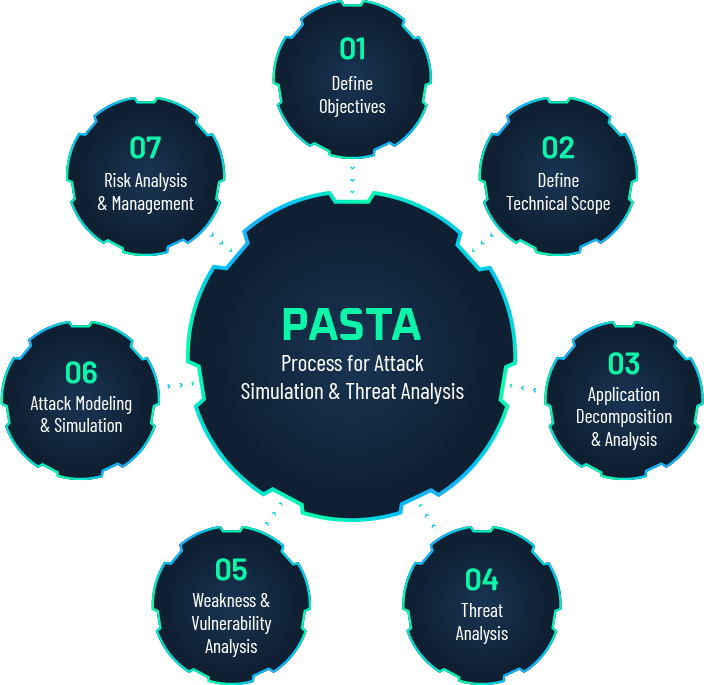
Download VerSprite’s guide to the Process for Attack Simulation and Threat Analysis, and learn how a risk-centric threat modeling methodology can strengthen integrated risk management. This approach helps teams prioritize viable threat patterns, understand likely attack scenarios, and align security efforts with business impact.
Download the eBook
PASTA is a risk-based threat modeling methodology designed to identify realistic attack paths against applications and system environments. It helps organizations analyze threats in context, map vulnerabilities to likely attack scenarios, and develop mitigation strategies that support both technical security and business risk management.
Complete the form to access the full ebook.
What You’ll Learn
- What PASTA threat modeling is and how it supports integrated risk management
- How to connect business objectives, security requirements, and application risk
- How to define technical scope, decompose applications, and identify trust boundaries
- How to analyze likely threats, vulnerabilities, and attack scenarios
- How to use attack modeling and simulation to prioritize security efforts
- How to evaluate residual risk and recommend cost-effective countermeasures
Why PASTA Supports Better Risk Management
Unlike threat modeling approaches that focus only on software or data, PASTA is designed to account for both technical and business risk. It helps organizations understand not just what is vulnerable, but why it matters, what the likely impact could be, and where mitigation efforts should be prioritized. That makes it a strong fit for integrated risk management programs that need visibility across security, architecture, development, and business operations.
Inside the PASTA Methodology
- Define business and security objectives
- Define the technical scope
- Decompose the application and analyze trust boundaries
- Perform threat analysis
- Map weaknesses and vulnerabilities
- Model and simulate attacks
- Analyze and manage residual risk
Who This eBook Is For
- Security architects
- Developers
- Security testers
- CISOs
- Business managers
- Project managers
- Information risk officers
Why This Approach Matters
PASTA gives organizations a practical framework for integrating information security, security engineering, and risk management disciplines. It helps teams move beyond isolated vulnerability analysis and toward a more complete view of threats, attacks, business impact, and mitigation strategy. For organizations building mature security programs, this creates a clearer roadmap for reducing risk across the SDLC and the broader application environment.
Get Instant Access
Download the ebook to learn how risk-centric threat modeling can improve application security, strengthen integrated risk management, and help your organization focus on the threats that matter most.
What is PASTA Risk Centric Threat Model?
- /
- /
- /
- /
- /
- /
- /
- /
- /
- /
- /
- /
- /
- /
- /
- /
- /
- /
- /
- /
- /
- /
Related Resources


Subscribe for Our Updates
Please enter your email address and receive the latest updates.
