VerSprite Weekly Threat Intelligence #50
Date
Follow Us


Date Range: 19 January 2026 – 23 January 2026
Issue: 50th Edition
Reported Period Victimology
Security Triumphs of the Week
Critical vulnerabilities were mitigated as Cisco patched a Chinese APT-exploited RCE flaw in email/web systems, TrustAsia revoked 143 rogue SSL certificates from a wildcard issuance flaw, and Cloudflare resolved a WAF bypass linked to ACME validation lapses. INC ransomware’s infrastructure misconfigurations enabled stolen data recovery for 12 U.S. entities, while Higham Lane School and London councils faced prolonged disruptions from unresolved attacks, underscoring persistent ransomware and hacktivist threats. Proactive patching and forensic collaboration emerged as key defenses amid escalating risks..
Cisco has finally patched a maximum-level security issue which was allegedly being targeted by Chinese hackers
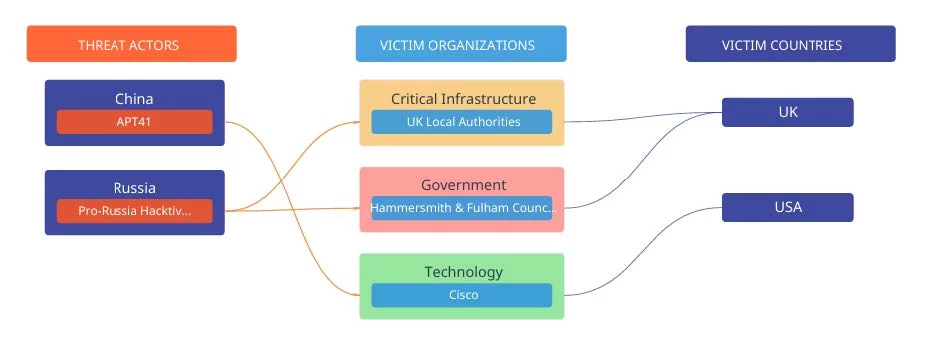
Cisco has patched a critical remote code execution (RCE) vulnerability (CVE-2025-20393) in its Secure Email Gateway and Web Manager appliances, which Chinese state-sponsored hackers exploited for weeks. The flaw, rated 10/10 in severity, allowed attackers to execute root-level commands and deploy tools like Aquashell, AquaTunnel, and log-clearing utilities. Updates remove these persistence mechanisms, but the global scale of compromised systems remains unclear. Groups linked to China, including APT41, allegedly targeted Cisco devices since late November 2025. Cisco urges immediate patching but has not disclosed the number of affected organizations.
Read full article: Techradar
Wildcard Hijack: TrustAsia Revokes 143 Certificates After LiteSSL Vulnerability
TrustAsia revoked 143 SSL certificates issued via its LiteSSL service after a critical vulnerability allowed unauthorized wildcard certificate issuance. The flaw stemmed from a misconfigured reverse proxy that incorrectly attributed client IPs to an internal address, bypassing rate limits. Additionally, LiteSSL’s DNS-01 challenge validation cached data indefinitely and failed to verify certificate requests against original accounts, enabling attackers to hijack validated domains. Researcher 00oo00 identified the issue, prompting TrustAsia to suspend services, revoke compromised certificates, and deploy fixes within hours. The vulnerability, patched by January 2026, risked Man-in-the-Middle attacks. Users with post December 2025 certificates are advised to verify their status.
Read full article: Securityonline
Cloudflare whacks WAF bypass bug that opened side door for attackers
Cloudflare addressed a critical vulnerability in its web application firewall (WAF) that allowed attackers to bypass security rules by exploiting a flaw in ACME certificate validation logic. The bug, reported by FearsOff researchers in October, enabled malicious actors to access origin servers, risking data theft or server compromise. The issue stemmed from improper validation of ACME HTTP-01 challenge tokens, which temporarily disabled WAF protections without verifying hostname-specific active challenges. Cloudflare resolved the flaw on October 27 by ensuring WAF features only deactivate for valid, hostname-matched tokens. While no exploitation was observed, researchers warned AI-driven attacks could amplify such bypass risks by automating exploitation of exposed paths. The fix required no customer action.
Read full article: Theregister
INC ransomware opsec fail allowed data recovery for 12 US orgs
An INC ransomware operational security failure enabled Cyber Centaurs to recover stolen data for 12 U.S. organizations across healthcare, manufacturing, technology, and service sectors. Forensic analysis revealed artifacts, including Restic backup tool remnants and hardcoded credentials, exposing attacker-controlled infrastructure storing encrypted victim data. Researchers confirmed the presence of unrelated victims’ data on INC’s servers, decrypted backups, and collaborated with law enforcement for validation. The gang reused infrastructure, leaving long-term data retention risks post-ransom. Cyber Centaurs developed YARA/Sigma rules to detect Restic-based ransomware activity. INC, active since 2023, has targeted high-profile entities globally, highlighting persistent ransomware threats.
Read full article: Bleepingcomputer
Warwickshire school to reopen after cyberattack crippled IT
Higham Lane School in Warwickshire will fully reopen after a severe cyberattack post Christmas forced a prolonged closure by crippling IT systems and critical safety infrastructure, including electronic gates, fire alarms, and attendance registers. The attack necessitated a two-week recovery effort, with staff rebuilding IT systems from scratch using personal devices for communication. While students return to full-time in-person teaching, staff face limited IT access, relying on adapted lesson plans and minimal mobile phone contact. The school collaborated with cybersecurity experts and authorities, though data stolen and perpetrators remain unidentified. The incident highlights vulnerabilities in school systems, with unclear details on attack methods or recurrence risks.
Read full article: Theregister
London boroughs limping back online months after cyberattack
A cyberattack targeting shared legacy systems in several London boroughs continues to disrupt services months later. Hammersmith & Fulham Council has restored payment processing but faces backlogs and incomplete account balances, while Westminster City Council delays direct debit resumption until 2024. Kensington & Chelsea confirmed criminal intent and data compromise, with full system restoration potentially taking months. Investigations and enhanced security measures are ongoing, with councils attributing the incident to a November attack on a neighboring authority. The UK’s NCSC warns local governments remain prime targets for disruptive, pro-Russia hacktivist attacks, amid reports of near-daily cyber threats.
Read full article: Theregister
Security Setbacks of the Week
This week saw a surge in ransomware attacks and data breaches targeting major corporations across retail, hospitality, and tech supply chains. Under Armour, Hyatt, Luxshare, and Ingram Micro faced significant breaches, exposing sensitive customer and employee data, while ransomware groups like Everest and RansomHub leveraged stolen information for extortion. Critical vulnerabilities in third-party platforms (Salesloft Drift, Zendesk) and infrastructure (FortiGate firewalls) enabled credential harvesting, phishing campaigns, and system takeovers, underscoring supply chain risks. Despite patch releases, attackers exploited unpatched flaws and bypassed MFA, highlighting persistent gaps in defense. The incidents emphasize escalating threats to global enterprises, with legal repercussions, phishing risks, and operational disruptions intensifying pressure for proactive security measures.
Under Armour cyberattack may put over 7 million at risk – but it’s staying quiet
Under Armour faced a significant cyberattack by the Everest ransomware group, resulting in a data breach affecting 72.2 million accounts. Stolen information includes names, emails, birthdates, purchase history, and potentially loyalty program details. Negotiations between the company and attackers failed, leading to data leaks on the dark web. Under Armour has not publicly addressed the breach, despite its inclusion in the “Have I Been Pwned” database. A class-action lawsuit was filed on behalf of affected customers, alleging negligence. While 76% of exposed emails were previously compromised, the breach increases risks of targeted phishing. The incident highlights ongoing cybersecurity challenges for major retailers.
Read full article: Techradar
Ransomware gang claims it hacked into Hyatt systems, says it has stolen data for sale
A ransomware group named NightSpire claims to have breached Hyatt Place Chelsea, stealing 48.5 GB of sensitive data, including employee credentials, invoices, and partner company information. The stolen data could enable phishing attacks, internal system access, and lateral movement within Hyatt’s network. Security researchers verified sample files, highlighting risks of social engineering and credential misuse. Hyatt has not yet confirmed the breach or provided an official response. The hospitality industry remains a frequent ransomware target due to its vast customer and employee data. If confirmed, the breach could impact Hyatt’s global operations, affecting employees, clients, and partners.
Read full article: Techradar
Key Apple, Nvidia, and Tesla supplier sees confidential files allegedly exposed in major breach – here’s what we know so far
A major ransomware attack targeted Luxshare, a key supplier for Apple, Nvidia, Tesla, and other tech giants, with the RansomHub group claiming responsibility. The breach allegedly exposed confidential data, including product designs, project timelines (2019–2025), 3D models, and employee PII such as names, emails, and job roles. RansomHub threatened to leak the data unless contacted, accusing Luxshare of concealing the incident. Stolen design files (.dwg, gerber) could benefit competitors, posing significant business risks. Employees are also at heightened phishing risk. RansomHub, active since 2024, has previously targeted high profile entities like Kawasaki and Change Healthcare.
Read full article: Techradar
Huge data breach reveals info on 750,000 investors – here’s what we know, and how to see if you’re affected
A 2025 cyberattack on the Canadian Investment Regulatory Organization (CIRO) exposed sensitive data of approximately 750,000 investors, including social insurance numbers, government IDs, account details, and financial information. Passwords, PINs, and security questions were not compromised. CIRO shut down parts of its infrastructure post-breach and conducted a 9,000-hour forensic investigation, finding no evidence of leaked or misused data. Affected individuals are offered two years of free credit monitoring and identity theft protection. CIRO is notifying victims via email, urging vigilance against phishing attempts leveraging stolen personal data. The breach highlights risks of identity fraud despite no direct financial credentials being stolen.
Read full article: Techradar
Ingram Micro reveals ransomware attack hit 42,000 people – here’s how to find out more
Ingram Micro disclosed a ransomware attack in July 2025 impacting 42,521 individuals, with stolen data including names, government IDs, contact details, and employment records. The breach, attributed to the SafePay group, allegedly involved 3.5TB of sensitive documents, though the ransom amount remains unconfirmed. Ingram Micro initiated an investigation, notified authorities, and offered affected individuals two years of credit monitoring. SafePay’s claims were not independently verified, but the scale suggests a multimillion-dollar ransom demand. The incident underscores risks to large B2B firms handling vast customer data.
Read full article: Techradar
Top online mentor site UStrive admits breach exposed data on children
UStrive, a US online mentoring platform, experienced a data breach exposing sensitive information of 238,000 users, including minors. A security researcher discovered a misconfigured Amazon-hosted GraphQL database, allowing unauthorized access to full names, emails, phone numbers, and user-provided data. UStrive confirmed the leak was fixed but did not disclose how long it persisted, whether malicious actors accessed the data, or if affected users were notified. The company cited ongoing litigation with a former software engineer as limiting its response. Database misconfigurations, a common cause of breaches, can lead to legal, financial, and reputational repercussions. The incident underscores the shared responsibility for data security in cloud environments.
Read full article: Techradar
Grubhub says hackers stole company data in recent breach – here’s what we know
Grubhub confirmed a data breach where hackers stole company information through compromised Salesloft Drift credentials. The ShinyHunters ransomware group, linked to the attack, is extorting Grubhub for bitcoin to prevent leaking Salesforce and Zendesk data. While Grubhub claims sensitive financial or order data wasn’t exposed, the extent of stolen information remains unclear. The breach is part of a broader Salesloft Drift security incident affecting at least 31 organizations since August 2025, including major firms like Cloudflare and Palo Alto Networks. ShinyHunters, known for data exfiltration over encryption, exploited leaked OAuth tokens from Salesloft’s Salesforce integration. Law enforcement and cybersecurity experts are involved in the investigation.
Read full article: Techradar
Zendesk tickets hijacked in massive spam campaign
Hackers exploited Zendesk’s support ticket system to launch a large-scale spam campaign, sending emails from legitimate domains of major companies like Discord, Tinder, Riot Games, and Dropbox. By submitting fake support tickets, attackers triggered automated confirmation emails, bypassing spam filters and flooding inboxes with hundreds of messages. The campaign, active since January 18, featured nonsensical subject lines but no malware or phishing links. Zendesk responded by implementing enhanced monitoring and activity limits to curb abuse. Affected organizations included government agencies and high-profile firms, highlighting vulnerabilities in automated customer service tools. The incident underscores risks of unverified user submissions in support platforms.
Read full article: Techradar
Top PC components store denies data breach – PcComponentes says it is safe, despite hacker claims
PcComponentes, a Spanish PC components retailer, denied a data breach despite a hacker’s claim of stealing 16.3 million records, including customer data. The company confirmed a credential stuffing attack, attributing compromised accounts to reused passwords from external breaches. It stated no internal systems or databases were breached, with far fewer active accounts affected than alleged. Stolen data included names, addresses, and IPs, but no financial details, as they are not stored. The company is enforcing CAPTCHA and mandatory two-factor authentication for future logins. Investigations continue, with the incident downplayed as limited in scope.
Read full article: Techradar
Crims compromised energy firms’ Microsoft accounts, sent 600 phishing emails
Unknown attackers targeted energy-sector organizations by compromising Microsoft accounts via phishing emails containing malicious SharePoint links. They harvested credentials, took over corporate inboxes, and sent over 600 phishing emails to internal and external contacts. Attackers created inbox rules to delete incoming emails and monitored responses to maintain access. Even password resets were insufficient, as criminals could tamper with multi-factor authentication (MFA) settings for persistence. Microsoft recommends enabling MFA, conditional access policies, and anti-phishing tools to mitigate such threats. The campaign highlights evolving tactics to bypass traditional security measures.
Read full article: Theregister
FortiGate firewalls hit by silent SSO intrusions and config theft
FortiGate firewalls are being targeted in automated attacks exploiting SSO authentication bypass flaws (CVE-2025-59718/59719), allowing attackers to create backdoor admin accounts, alter VPN/firewall rules, and steal configuration files containing sensitive data. Arctic Wolf observed these intrusions since mid-January, linked to compromised SSO accounts. Despite patches released in December 2023, admins report fully updated systems remain vulnerable, suggesting a patch bypass. Fortinet plans additional updates (FortiOS 7.4.11, 7.6.6, 8.0.0) to address the issue. Organizations are advised to audit admin accounts, review configurations, rotate credentials, and monitor SSO activity until fixes are deployed.
Read full article: Theregister
The New Emerging Threats
This week saw a surge in ransomware attacks and data breaches targeting major corporations across retail, hospitality, and tech supply chains. Under Armour, Hyatt, Luxshare, and Ingram Micro faced significant breaches, exposing sensitive customer and employee data, while ransomware groups like Everest and RansomHub leveraged stolen information for extortion. Critical vulnerabilities in third-party platforms (Salesloft Drift, Zendesk) and infrastructure (FortiGate firewalls) enabled credential harvesting, phishing campaigns, and system takeovers, underscoring supply chain risks. Despite patch releases, attackers exploited unpatched flaws and bypassed MFA, highlighting persistent gaps in defense. The incidents emphasize escalating threats to global enterprises, with legal repercussions, phishing risks, and operational disruptions intensifying pressure for proactive security measures.
Under Armour cyberattack may put over 7 million at risk – but it’s staying quiet
Under Armour faced a significant cyberattack by the Everest ransomware group, resulting in a data breach affecting 72.2 million accounts. Stolen information includes names, emails, birthdates, purchase history, and potentially loyalty program details. Negotiations between the company and attackers failed, leading to data leaks on the dark web. Under Armour has not publicly addressed the breach, despite its inclusion in the “Have I Been Pwned” database. A class-action lawsuit was filed on behalf of affected customers, alleging negligence. While 76% of exposed emails were previously compromised, the breach increases risks of targeted phishing. The incident highlights ongoing cybersecurity challenges for major retailers.
Read full article: Techradar
Ransomware gang claims it hacked into Hyatt systems, says it has stolen data for sale
A ransomware group named NightSpire claims to have breached Hyatt Place Chelsea, stealing 48.5 GB of sensitive data, including employee credentials, invoices, and partner company information. The stolen data could enable phishing attacks, internal system access, and lateral movement within Hyatt’s network. Security researchers verified sample files, highlighting risks of social engineering and credential misuse. Hyatt has not yet confirmed the breach or provided an official response. The hospitality industry remains a frequent ransomware target due to its vast customer and employee data. If confirmed, the breach could impact Hyatt’s global operations, affecting employees, clients, and partners.
Read full article: Techradar
Key Apple, Nvidia, and Tesla supplier sees confidential files allegedly exposed in major breach – here’s what we know so far
A major ransomware attack targeted Luxshare, a key supplier for Apple, Nvidia, Tesla, and other tech giants, with the RansomHub group claiming responsibility. The breach allegedly exposed confidential data, including product designs, project timelines (2019–2025), 3D models, and employee PII such as names, emails, and job roles. RansomHub threatened to leak the data unless contacted, accusing Luxshare of concealing the incident. Stolen design files (.dwg, gerber) could benefit competitors, posing significant business risks. Employees are also at heightened phishing risk. RansomHub, active since 2024, has previously targeted high profile entities like Kawasaki and Change Healthcare.
Read full article: Techradar
Huge data breach reveals info on 750,000 investors – here’s what we know, and how to see if you’re affected
A 2025 cyberattack on the Canadian Investment Regulatory Organization (CIRO) exposed sensitive data of approximately 750,000 investors, including social insurance numbers, government IDs, account details, and financial information. Passwords, PINs, and security questions were not compromised. CIRO shut down parts of its infrastructure post-breach and conducted a 9,000-hour forensic investigation, finding no evidence of leaked or misused data. Affected individuals are offered two years of free credit monitoring and identity theft protection. CIRO is notifying victims via email, urging vigilance against phishing attempts leveraging stolen personal data. The breach highlights risks of identity fraud despite no direct financial credentials being stolen.
Read full article: Techradar
Ingram Micro reveals ransomware attack hit 42,000 people – here’s how to find out more
Ingram Micro disclosed a ransomware attack in July 2025 impacting 42,521 individuals, with stolen data including names, government IDs, contact details, and employment records. The breach, attributed to the SafePay group, allegedly involved 3.5TB of sensitive documents, though the ransom amount remains unconfirmed. Ingram Micro initiated an investigation, notified authorities, and offered affected individuals two years of credit monitoring. SafePay’s claims were not independently verified, but the scale suggests a multimillion-dollar ransom demand. The incident underscores risks to large B2B firms handling vast customer data.
Read full article: Techradar
Top online mentor site UStrive admits breach exposed data on children
UStrive, a US online mentoring platform, experienced a data breach exposing sensitive information of 238,000 users, including minors. A security researcher discovered a misconfigured Amazon-hosted GraphQL database, allowing unauthorized access to full names, emails, phone numbers, and user-provided data. UStrive confirmed the leak was fixed but did not disclose how long it persisted, whether malicious actors accessed the data, or if affected users were notified. The company cited ongoing litigation with a former software engineer as limiting its response. Database misconfigurations, a common cause of breaches, can lead to legal, financial, and reputational repercussions. The incident underscores the shared responsibility for data security in cloud environments.
Read full article: Techradar
Grubhub says hackers stole company data in recent breach – here’s what we know
Grubhub confirmed a data breach where hackers stole company information through compromised Salesloft Drift credentials. The ShinyHunters ransomware group, linked to the attack, is extorting Grubhub for bitcoin to prevent leaking Salesforce and Zendesk data. While Grubhub claims sensitive financial or order data wasn’t exposed, the extent of stolen information remains unclear. The breach is part of a broader Salesloft Drift security incident affecting at least 31 organizations since August 2025, including major firms like Cloudflare and Palo Alto Networks. ShinyHunters, known for data exfiltration over encryption, exploited leaked OAuth tokens from Salesloft’s Salesforce integration. Law enforcement and cybersecurity experts are involved in the investigation.
Read full article: Techradar
Zendesk tickets hijacked in massive spam campaign
Hackers exploited Zendesk’s support ticket system to launch a large-scale spam campaign, sending emails from legitimate domains of major companies like Discord, Tinder, Riot Games, and Dropbox. By submitting fake support tickets, attackers triggered automated confirmation emails, bypassing spam filters and flooding inboxes with hundreds of messages. The campaign, active since January 18, featured nonsensical subject lines but no malware or phishing links. Zendesk responded by implementing enhanced monitoring and activity limits to curb abuse. Affected organizations included government agencies and high-profile firms, highlighting vulnerabilities in automated customer service tools. The incident underscores risks of unverified user submissions in support platforms.
Read full article: Techradar
LastPass warns users of new phishing campaign sending out fake support messages
LastPass has alerted users to a new phishing campaign distributing fake emails posing as urgent maintenance notifications. The fraudulent messages pressure recipients to back up their password vaults within 24 hours, aiming to steal master passwords and sensitive data. LastPass emphasized it never requests master passwords and confirmed the emails are scams. Suspicious sender addresses include domains like “sr22vegas[.]com” and “lastpass[.]server” variants. The company is collaborating with partners to take down malicious domains and urges users to report phishing attempts. Users are advised to verify email sources and avoid sharing credentials.
Read full article: Techradar
Top PC components store denies data breach – PcComponentes says it is safe, despite hacker claims
PcComponentes, a Spanish PC components retailer, denied a data breach despite a hacker’s claim of stealing 16.3 million records, including customer data. The company confirmed a credential stuffing attack, attributing compromised accounts to reused passwords from external breaches. It stated no internal systems or databases were breached, with far fewer active accounts affected than alleged. Stolen data included names, addresses, and IPs, but no financial details, as they are not stored. The company is enforcing CAPTCHA and mandatory two-factor authentication for future logins. Investigations continue, with the incident downplayed as limited in scope.
Read full article: Techradar
Crims compromised energy firms’ Microsoft accounts, sent 600 phishing emails
Unknown attackers targeted energy-sector organizations by compromising Microsoft accounts via phishing emails containing malicious SharePoint links. They harvested credentials, took over corporate inboxes, and sent over 600 phishing emails to internal and external contacts. Attackers created inbox rules to delete incoming emails and monitored responses to maintain access. Even password resets were insufficient, as criminals could tamper with multi-factor authentication (MFA) settings for persistence. Microsoft recommends enabling MFA, conditional access policies, and anti-phishing tools to mitigate such threats. The campaign highlights evolving tactics to bypass traditional security measures.
Read full article: Theregister
FortiGate firewalls hit by silent SSO intrusions and config theft
FortiGate firewalls are being targeted in automated attacks exploiting SSO authentication bypass flaws (CVE-2025-59718/59719), allowing attackers to create backdoor admin accounts, alter VPN/firewall rules, and steal configuration files containing sensitive data. Arctic Wolf observed these intrusions since mid-January, linked to compromised SSO accounts. Despite patches released in December 2023, admins report fully updated systems remain vulnerable, suggesting a patch bypass. Fortinet plans additional updates (FortiOS 7.4.11, 7.6.6, 8.0.0) to address the issue. Organizations are advised to audit admin accounts, review configurations, rotate credentials, and monitor SSO activity until fixes are deployed.
Read full article: Theregister
In-Depth Expert CTI Analysis
Critical infrastructure and major enterprises faced relentless cyberattacks, with state sponsored and ransomware groups exploiting severe vulnerabilities in Cisco, FortiGate, and Laravel Reverb. AI-driven threats surged, including VoidLink malware and phishing kits, while ransomware disrupted education, healthcare, and supply chains. Pro-Russia hacktivists targeted critical services, and supply chain risks emerged via PyPI, WordPress plugins, and CI/CD misconfigurations. Organizations must prioritize patching, multi-factor authentication, and AI-aware defenses to counter evolving tactics.
Proactive Defense and Strategic Foresight
Recent incidents underscore the critical need for proactive defense and strategic foresight in cybersecurity. The exploitation of unpatched vulnerabilities (Cisco, FortiGate, HPE) and AI-driven malware (VoidLink) highlights adversaries’ rapid weaponization of emerging tools. Organizations must prioritize timely patching, robust dependency vetting, and AI-enhanced threat detection to counter evolving tactics. Persistent ransomware campaigns, supply chain compromises (PyPI, Laravel), and social engineering (AiTM phishing, macOS malware) demand layered defenses, including immutable backups, zero-trust architectures, and continuous user education. Strategic foresight requires anticipating adversarial innovation—such as AI-generated attacks and dark web “as-a-service” models—while hardening legacy systems and critical infrastructure against disruptive threats. Proactive measures, coupled with cross-sector threat intelligence sharing, are vital to mitigate cascading risks in an increasingly interconnected threat landscape.
Evolving Ransomware and Malware Tactics
Ransomware and malware tactics continue evolving with alarming sophistication. Recent incidents highlight AI-driven automation (VoidLink malware), supply chain compromises (Luxshare, Salesloft Drift), and abuse of trusted platforms (Zendesk, Laravel Reverb). Attackers increasingly exploit zero-day vulnerabilities (Cisco, HPE OneView) and leverage social engineering (AiTM phishing, macOS malware) to bypass defenses. Ransomware groups now prioritize data exfiltration over encryption, threatening leaks (Everest, RansomHub) while adopting MFA bypass and session hijacking for persistence. Critical infrastructure remains a prime target, with attacks crippling schools, councils, and energy sectors. Defenders must prioritize patch management, zero-trust architectures, and AI powered threat detection to counter these adaptive threats.
State-Sponsored and Organized Cybercrime Convergence
The convergence of state-sponsored and organized cybercrime is accelerating, evidenced by shared tactics, tools, and infrastructure. State actors like APT41 exploit critical vulnerabilities (e.g., Cisco RCE) for espionage, while ransomware groups (RansomHub, INC) target high-value entities (Luxshare, Hyatt) with precision mirroring nation-state tradecraft. AI-driven tools (VoidLink) and dark web services (phishing kits, MaaS) democratize advanced capabilities, enabling scalable attacks. Pro-Russia hacktivists disrupt critical infrastructure, blurring lines between political and criminal motives. Vulnerabilities in legacy systems (London councils) and cloud platforms (AWS CodeBuild) are exploited by both factions, emphasizing the need for proactive patching and zero-trust frameworks. This symbiosis demands unified defenses against hybrid threats leveraging geopolitical chaos and technological innovation.
Operational and Tactical Implications
The operational landscape demands urgent patching and legacy system modernization, as seen in Cisco, FortiGate, and HPE OneView exploits, where delayed updates enabled state-sponsored and botnet attacks. Tactically, defenders must prioritize real-time monitoring for persistence mechanisms (e.g., Aquashell), enforce MFA, and segment networks to contain lateral movement risks from credential theft (Hyatt, Luxshare). Ransomware groups’ operational security failures (INC) highlight forensic artifact analysis and decryption as critical response tactics. AI-driven threats (VoidLink, Dark LLMs) necessitate adaptive defenses against scalable, automated attacks. Supply chain vulnerabilities (AWS CodeBuild, PyPI) and insider threats (LA-Studio) require stringent third-party audits and least-privilege access. Geopolitical risks (NCSC, pro-Russia groups) underscore the need for DDoS mitigation and infrastructure resilience.
Forward-Looking Recommendations
- Prioritize immediate patching of critical vulnerabilities (CVE-2025-20393, CVE-2026-24061) and enforce network segmentation to limit lateral movement post-breach.
- Strengthen ransomware defenses with immutable backups, air-gapped systems, and proactive threat hunting for Restic/Aquashell artifacts.
- Adopt AI-driven anomaly detection to counter evolving threats like VoidLink and AI-generated phishing campaigns.
- Mandate MFA with phishing-resistant methods (FIDO2) and audit third-party integrations (Salesloft, Zendesk) to mitigate supply chain risks.
- Implement strict CI/CD pipeline controls, regex validation, and dependency scanning to prevent code injection.
- Align with NCSC advisories for CNI protection, including DDoS mitigation and zero-trust frameworks.
- Conduct red-team exercises targeting legacy systems and insider threat scenarios.
- Accelerate migration from deprecated protocols (telnet) to encrypted alternatives (SSH)
