CI/CD Security Services
Secure CI/CD Pipelines with Automated Security Testing and Continuous Risk Monitoring
- /
- /
- /
- /
- /
- /
- /
- /
- /
- /
- /
- /
- /
- /
- /
- /
- /
- /
- /
- /
- /
- /
Secure Your Development Pipeline with VerSprite’s DevSecOps
VerSprite empowers organizations to shift left from traditional security measures, integrating robust security practices throughout the entire software development lifecycle.
The Critical Importance of CI/CD Security in Modern Software Development
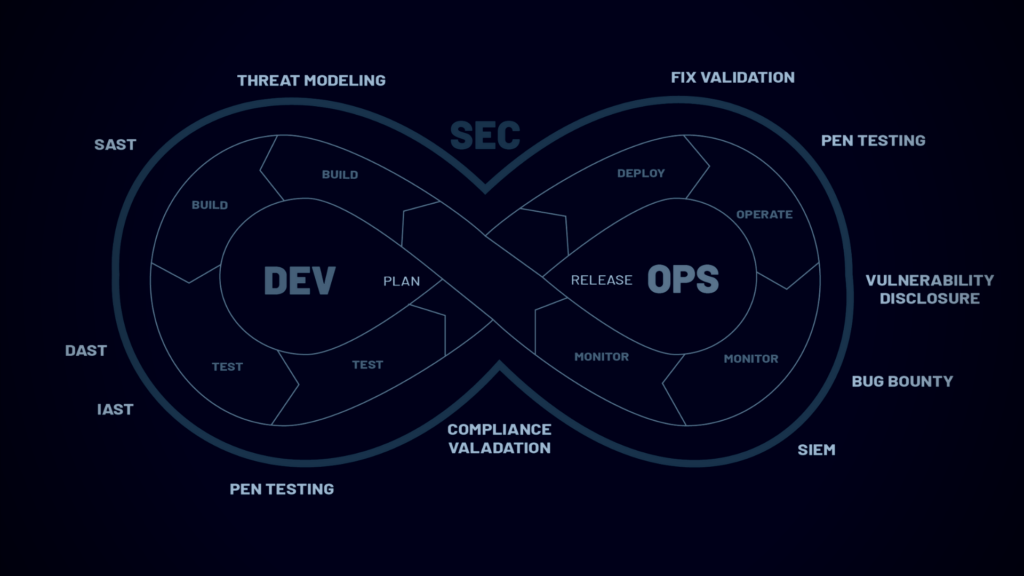
In today’s rapidly evolving threat landscape, security can no longer be an afterthought. While Development Operations (DevOps) has been the industry standard for years, forward-thinking organizations recognize that Development Security Operations (DevSecOps) represents the new paradigm for sustainable software security.
Modern enterprises require comprehensive services that:
- Simplify infrastructure provisioning
- Streamline deployment processes
- Automate software release cycles
- Provide continuous application monitoring
- Integrate security at every stage
DevSecOps is the strategic approach that fulfills these requirements.
By embedding security throughout each phase of the Software Development Lifecycle (SDLC), organizations can achieve:
- More efficient application releases
- Real-time threat detection and remediation
- Reduced security debt
- Significantly lower remediation costs
- Enhanced overall security posture
- /
- /
- /
- /
- /
- /
- /
- /
- /
- /
- /
- /
- /
- /
- /
- /
- /
- /
- /
- /
- /
- /
Industries We Serve
VerSprite delivers CI/CD Security across industries where security failures translate directly to financial loss, safety risk, or regulatory exposure.
Financial Services & FinTech
-
Secure CI/CD pipelines supporting banking platforms, payment systems, and financial applications
-
Identify risks in source code repositories, build servers, and deployment workflows
-
Assess exposure to supply chain compromise, dependency manipulation, and pipeline abuse
-
Implement controls to protect release integrity and meet regulatory compliance expectations
Healthcare & Life Sciences
-
Secure development pipelines supporting clinical applications and systems processing ePHI
-
Identify vulnerabilities in code repositories, build processes, and artifact management
-
Assess risks introduced through third-party libraries and open-source dependencies
-
Strengthen release governance to protect patient data and operational continuity
SaaS & Technology Providers
-
Harden CI/CD pipelines across cloud-native and microservices environments
-
Identify risks in automated testing, container builds, and infrastructure-as-code workflows
-
Assess exposure to credential leakage, artifact tampering, and supply chain attacks
-
Implement security controls to ensure trusted, repeatable, and secure software releases
Retail & E-Commerce
-
Secure pipelines supporting e-commerce platforms, mobile applications, and payment integrations
-
Identify vulnerabilities in build systems, deployment automation, and third-party integrations
-
Assess risk of malicious code injection and release manipulation
-
Protect release integrity to reduce fraud exposure and service disruption
Manufacturing & Critical Infrastructure
-
Secure development and deployment workflows supporting production and operational systems
-
Identify supply chain and dependency risks impacting industrial applications
-
Assess exposure within build environments and remote development processes
-
Strengthen pipeline security to protect operational stability and safety
- /
- /
- /
- /
- /
- /
- /
- /
- /
- /
- /
- /
- /
- /
- /
- /
- /
- /
- /
- /
- /
- /
VerSprite’s DevSecOps Maturity Assessment Framework (PASTA)
VerSprite has developed a proprietary DevSecOps Maturity model and assessment framework (PASTA) that provides organizations with a comprehensive understanding of their current security integration status and DevSecOps readiness.
Our assessment methodology delivers:
- A detailed organizational scorecard
- Clear establishment of your security baseline
- Strategic roadmap development
- Business-focused implementation plan
The PASTA framework evaluates three critical dimensions:
1. People
- Security awareness and training
- Cross-functional collaboration
- Role-based security responsibilities
- Security champions program
2. Processes
- Security requirements integration
- Threat modeling practices
- Continuous security testing
- Security incident response
- Security governance
3. Tools
- Security automation capabilities
- Security testing integration
- Vulnerability management
- Configuration security
- Secret management
- /
- /
- /
- /
- /
- /
- /
- /
- /
- /
- /
- /
- /
- /
- /
- /
- /
- /
- /
- /
- /
- /
VerSprite helps organizations address critical DevSecOps challenges, ensuring clear visibility throughout the development lifecycle while maintaining security as the central focus.
- /
- /
- /
- /
- /
- /
- /
- /
- /
- /
- /
- /
- /
- /
- /
- /
- /
- /
- /
- /
- /
- /
DevSecOps Transformation: CI/CD Security as a Service
Based on our comprehensive maturity assessment, VerSprite defines a complete roadmap to transform your organization from traditional DevOps methodologies to an agile DevSecOps model.
Our CI/CD Security as a Service includes:
Strategic Planning and Implementation
- Tool selection and integration throughout the CI/CD pipeline
- Implementation of continuous security monitoring
- Development of automated remediation workflows
- Security-focused pipeline design
Cross-Functional Collaboration
- Breaking down organizational silos
- Facilitating collaboration between development, security, and operations teams
- Establishing security communication channels
- Engagement with key stakeholders
Comprehensive Security Integration
- Secure code repository configuration
- Static Application Security Testing (SAST)
- Dynamic Application Security Testing (DAST)
- Software Composition Analysis (SCA)
- Infrastructure as Code (IaC) security scanning
- Container security scanning
- Secrets management
- Compliance as Code implementation
- /
- /
- /
- /
- /
- /
- /
- /
- /
- /
- /
- /
- /
- /
- /
- /
- /
- /
- /
- /
- /
- /
CI/CD Security FAQs
What is CI/CD security?
CI/CD security is the practice of securing continuous integration and continuous delivery pipelines to protect code, build systems, and deployment processes from vulnerabilities and attacks. It ensures that software is developed, tested, and deployed securely throughout the entire lifecycle.
Why is CI/CD security important?
CI/CD pipelines are critical to modern software delivery and often operate with high privileges, making them a prime target for attackers. Securing these pipelines helps prevent supply chain attacks, code tampering, and unauthorized access to production environments.
What are the main risks in CI/CD pipelines?
Common CI/CD security risks include:
- Credential leakage and poor secrets management
- Dependency and supply chain attacks
- Unauthorized access to build systems
- Artifact tampering and pipeline manipulation
- Misconfigured infrastructure and insecure integrations
What is included in CI/CD security services?
CI/CD security services typically include:
- Secure code repository configuration
- Static and dynamic application security testing (SAST and DAST)
- Software composition analysis (SCA)
- Infrastructure as Code (IaC) scanning
- Container security and secrets management
- Continuous monitoring and automated remediation
How does CI/CD security support DevSecOps?
CI/CD security is a core component of DevSecOps, embedding automated security controls directly into development pipelines. This enables organizations to identify and fix vulnerabilities early without slowing down development velocity.
What tools are used in CI/CD security?
CI/CD security leverages tools such as:
- SAST and DAST scanners
- Dependency scanning tools (SCA)
- Container and cloud security tools
- Secrets management platforms
- CI/CD platforms like Jenkins, GitHub Actions, and GitLab CI
How can organizations secure their CI/CD pipelines?
Organizations can secure pipelines by implementing access controls, automating security testing, validating artifact integrity, monitoring pipeline activity, and enforcing secure configurations across all environments.
What is “shift-left” security in CI/CD?
Shift-left security means integrating security earlier in the development lifecycle, such as during coding and build stages. This approach reduces remediation costs and prevents vulnerabilities from reaching production environments.
What industries benefit from CI/CD security?
Industries such as fintech, healthcare, SaaS, retail, and critical infrastructure benefit from CI/CD security due to the high risk associated with software supply chain attacks and regulatory requirements.
What makes VerSprite’s CI/CD security services different?
VerSprite provides a risk-based, DevSecOps-driven approach that integrates automated security testing, continuous monitoring, and threat modeling into CI/CD pipelines, enabling secure software delivery without sacrificing speed.
What is the difference between CI/CD security and DevSecOps?
CI/CD security focuses specifically on securing the pipeline and its components, while DevSecOps is a broader approach that integrates security across the entire software development lifecycle. CI/CD security is a key part of a successful DevSecOps strategy.
When should organizations implement CI/CD security?
Organizations should implement CI/CD security when adopting DevOps practices, building cloud-native applications, or handling sensitive data. It is especially critical when pipelines are automated and integrated with production systems.
How do CI/CD pipelines get compromised?
CI/CD pipelines can be compromised through credential theft, insecure configurations, malicious code injection, compromised dependencies, or unauthorized access to build and deployment systems. These attacks can lead to large-scale supply chain breaches.
- /
- /
- /
- /
- /
- /
- /
- /
- /
- /
- /
- /
- /
- /
- /
- /
- /
- /
- /
- /
- /
- /
Resources



We’re Not a Vendor
We’re Your Security Partner
- Risk-centric security
- True extension of your team
- Executive-level experience
